

Aeration and Overseeding in the Fall: How to Thicken Your Lawn Before Winter
Topics Index
- The Fall Lawn Reset
- Why Compacted Soil Keeps Lawns Thin
- What Deep Root Aeration Does
- Why Overseeding Lawn Areas Matters Before Winter
- How Virginia Green's Aeration & Seeding is Different
- Frequently Asked Questions
Lawncare Starts in the Fall
One of the biggest misconceptions we see among a lot of homeowners is the idea that taking care of your lawn can be delayed until the springtime. However, to make your lawn look great in the spring, the preparation starts in the fall.
By the end of summer, many cool-season lawns look tired. Heat, drought stress, disease pressure, foot traffic, and mowing can leave behind thin spots, weak color, and compacted soil. Overall, fall gives cool-season lawns their best chance to recover from these factors with the proper services. The air cools down, the soil still holds warmth, and new grass has time to grow before winter. That is why we focus on fall aeration and seeding during this time (cool-season lawns).
For homeowners who want a thicker lawn next spring, fall is the season to build it.
Why Compacted Soil Keeps Lawns Thin
Compacted soil limits root growth. When the soil particles are too close together, water, air, and nutrients have a harder time reaching the root zone. Grass may grow shallow roots, thin out faster during stress, and leave more open space for weeds. Many lawns benefit from annual aeration
You may be dealing with compacted soil if you notice:
- Hard ground underfoot
- Water running off instead of soaking in
- Thin grass near walkways, driveways, or play areas
- Bare spots after summer
- Weak response after watering
- Heavy clay soil
Aeration allows the lawn can use water, nutrients, and oxygen more effectively.
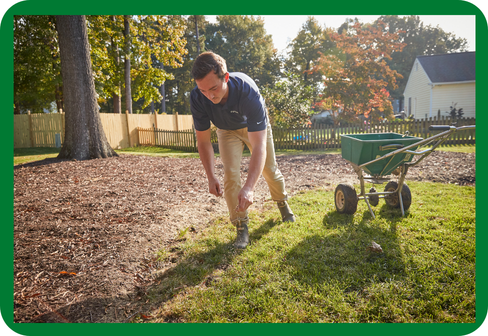
The borders of your lawn can be the most compacted areas. We pay close attention to the boundaries of your lawn to ensure full coverage of the seed.
What Deep Root Aeration Does
Deep root aeration removes small plugs of soil from the lawn. Those openings reduce compaction and create space where air, water, nutrients, and seed can move into the soil.
Unlike traditional aeration services, we overlap passes. This allows us to hit every area of the lawn twice, creating holes and removing plugs which improves seed-to-soil contact and gives new grass a better place to start. Additionally, the effects of your lawn care treatments can be optimized with the soil taking in more nutrients.
Why Overseeding Lawn Areas Matters Before Winter
Overseeding lawn areas in the fall can help fill weak spots with new grass. The goal is not just to make the lawn look better for a few weeks. The goal is to improve turf density before winter, so the lawn has a stronger start next spring. Aeration timing is crucial to see results.
How Virginia Green's Aeration & Overseeding is Different
At Virginia Green, we approach fall aeration and seeding differently:
- We use an exclusive custom blend of 100% weed-free seed engineered for Mid-Atlantic soil conditions.
- We use specialized equipment to core deeper into the soil, distribute seed more evenly, and maximize seed-to-soil contact for better germination.
- Our technicians take the time to focus on borders, corners, and other high-visibility areas that others may rush past, helping create a polished result across your entire lawn.
- We provide a complimentary follow-up visit and a bag of touch-up seed to help ensure your lawn continues to thrive after treatment.
- Every lawn care, pest control, and tree and shrub program is backed by our 100% satisfaction guarantee. Not happy with the results? We will re-treat your yard free of charge for as long as it takes to get it right.
To learn how to prep your lawn for aeration, click here
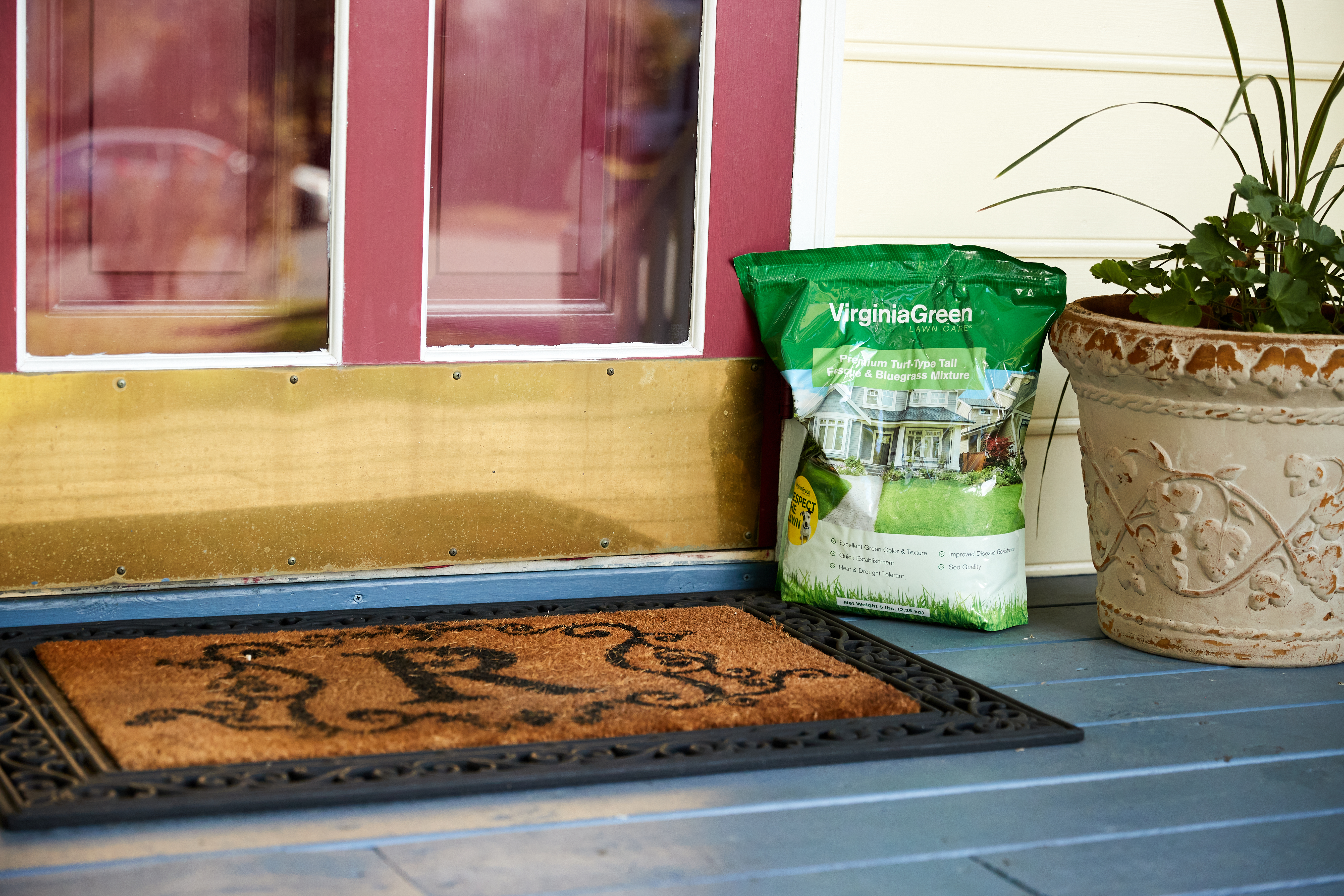
Pictured is the Virginia Green Gold Tag seed bag (5 lb) we leave at your door post-treatment. (Only For Virginia Green Customers)