

How to Prep Your Lawn for Aeration & Seeding Day
Topics Index
- Why Aeration and Seeding Matters
- Your Preparation Checklist Before Aeration and Seeding
- Your Post-Service Care Checklist After Aeration and Seeding
- Frequently Asked Questions
Why Aeration and Seeding Matters
Aeration and seeding is one of the most important services your lawn receives each year. Over time, Mid-Atlantic lawns can become compacted from mowing, foot traffic, pets, and everyday outdoor use. When soil particles become packed too tightly, grass roots struggle to access the air, water, and nutrients they need. Aeration and seeding can help relieve compaction and promote healthier growth.
Fall aeration and seeding also plays a critical role in helping lawns recover from the stress and damage of summer. Heat, drought, and heavy use can leave turf thin, weakened, and struggling to bounce back. This service helps rejuvenate the lawn by rebuilding turf density and reestablishing healthy grass growth, setting the foundation for long-term success. Because cool-season grasses cannot naturally spread and fill in damaged areas on their own, seeding is essential for restoring a thick, healthy lawn after the toll of summer.
At Virginia Green, we approach fall aeration and seeding differently:
- We use an exclusive custom blend of 100% weed-free seed engineered for Mid-Atlantic soil conditions.
- We use specialized equipment to core deeper into the soil, distribute seed more evenly, and maximize seed-to-soil contact for better germination. Our machines are calibrated to put down 5 lbs of seed per 1,000 sq. ft. That’s roughly double the standard.
- Our technicians take the time to focus on borders, corners, and other high-visibility areas that others may rush past, helping create a polished result across your entire lawn.
- We provide a bag of touch-up seed to help ensure your lawn continues to thrive after treatment.
- Every lawn care, pest control, and tree and shrub program is backed by our 100% satisfaction guarantee. Not happy with the results? We will re-treat your yard free of charge for as long as it takes to get it right.
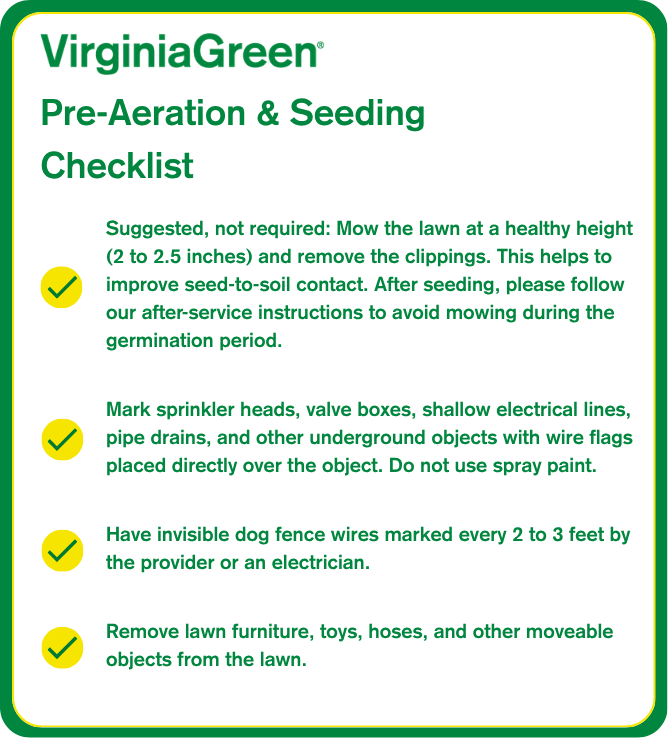
Your Preparation Checklist Before Aeration and Seeding
Preparing your property before your scheduled visit helps our technicians complete the service safely and efficiently while giving your lawn the best opportunity for strong, healthy growth. Please complete the checklist below before service day.
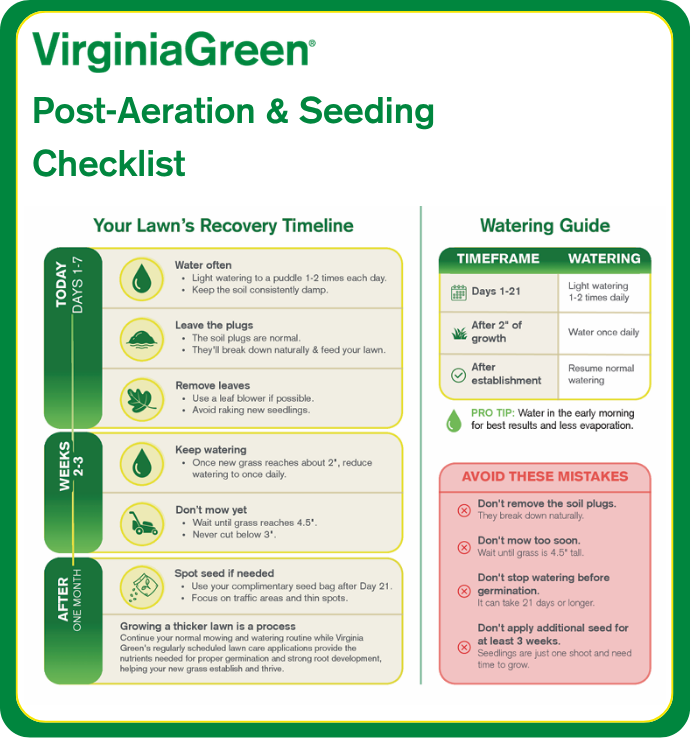
Your Post-Service Care Checklist After Aeration and Seeding
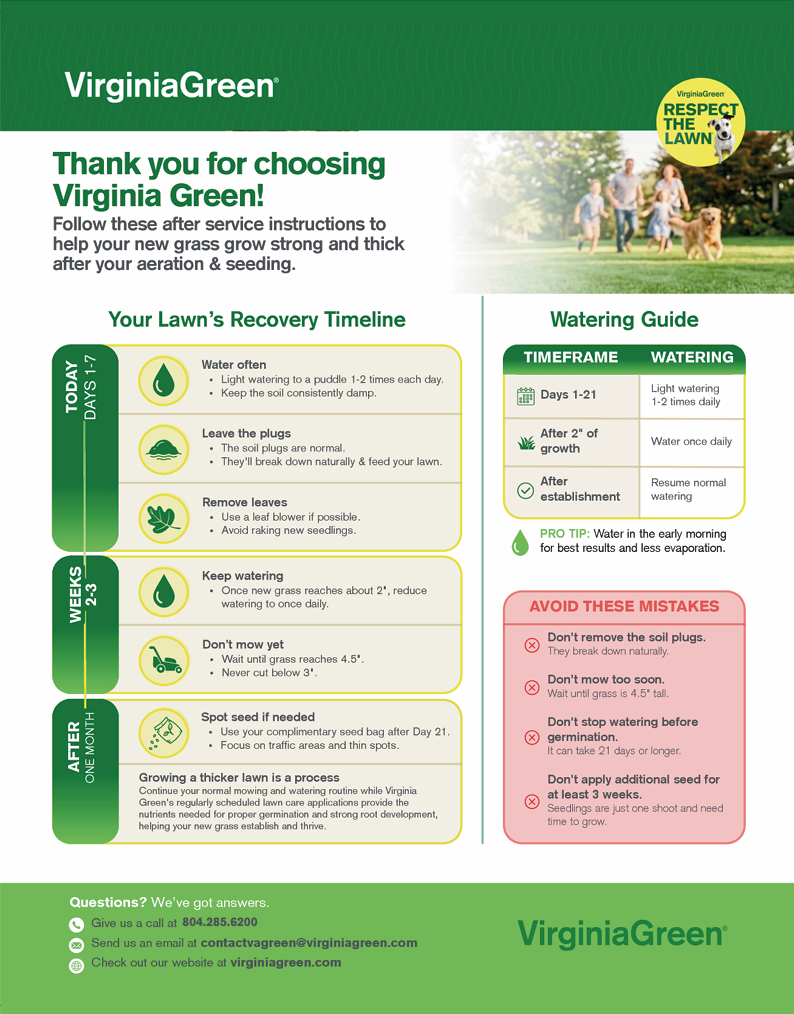
Growing a thicker lawn takes time, and caring for your newly aerated and seeded lawn is essential. Follow these post-service instructions to help your new grass grow strong, thick, and healthy. Your satisfaction is not optional to us. It is guaranteed. If you are unhappy with your results or have questions about your service, please call us at 804-285-6200.
Frequently Asked Questions
Should I cut my grass before aeration?
Should I control weeds before aerating?
Should I water before aeration?
Why don't I see as much seed after the service?