

How to Plant a Tree the Right Way for Lasting Health
Topics Index
- Why Proper Tree Planting Matters in Virginia
- Choosing the Right Tree for the Right Place
- How to Plant a Tree Step by Step
- Watering and Mulching After Planting
- What to Know About Fertilizers for Trees and Shrubs
- Frequently Asked Questions
Why Proper Tree Planting Matters in Virginia
A tree can live for decades, but its future often depends on the first few hours in the ground. A tree planted too deep, placed in the wrong spot, or watered poorly can struggle for years.
Virginia weather can be tough on young trees. Hot summers, clay-heavy soils, dry stretches, and heavy rain can all affect root development. When homeowners understand how to plant a tree correctly, they give new trees a better chance to establish strong roots and healthy growth.
Choose the Right Tree for the Right Place
Before digging, look at the full-grown size of the tree. A small nursery tree can become a large shade tree over time. Make sure it has enough room away from the house, driveway, sidewalk, roofline, septic areas, and overhead or underground utilities.
Also think about sunlight, drainage, and soil. Some trees handle full sun and drier soil well. Others need more consistent moisture or protection from afternoon heat. In Virginia, choosing a tree that matches the site matters as much as planting it correctly.
Before you dig, call 811 to have underground utilities marked
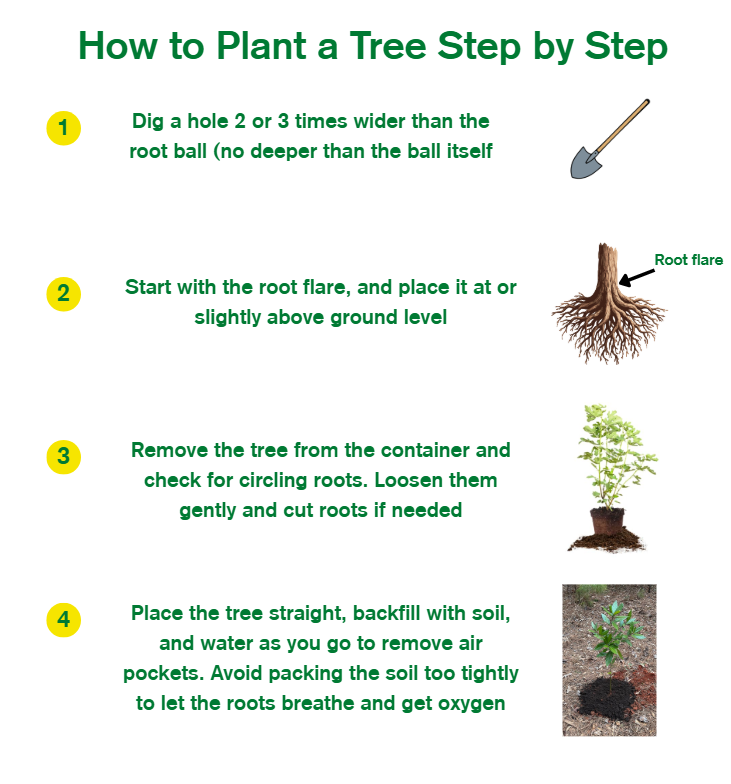
Instructions for Planting a Tree
Instructions may vary by the type of tree.
Watering and Mulching After Planting
New trees need consistent moisture while roots establish. Water deeply rather than giving the tree quick, shallow watering. During dry Virginia weather, check soil moisture often, especially during the first growing season.
Mulch helps hold soil moisture, regulate soil temperature, and reduce competition from grass and weeds. Apply a light mulch ring around the tree, but keep mulch several inches away from the trunk. Do not pile mulch against the bark. A “mulch volcano” can trap moisture, invite pests, and damage the trunk.
Staking is not always necessary. If the tree is stable, let it move naturally in the wind. If staking is needed, keep ties loose and remove them once the tree can stand on its own.
What to Know About Fertilizers for Trees and Shrubs
Many homeowners want to fertilize right after planting, but new trees do not always need fertilizer immediately. The best approach depends on the tree, soil, site conditions, and signs of stress.
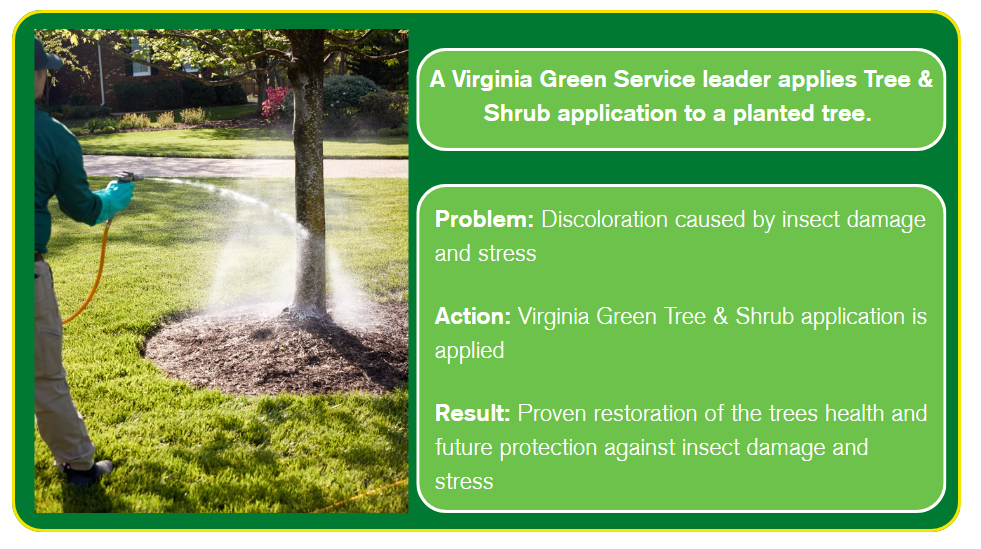
Professional fertilizers for tree and shrubs can support plant health when applied at the right time and in the right amount. Too much fertilizer, or fertilizer applied at the wrong time, can stress new roots instead of helping them.
Virginia Green’s tree and shrub care services can help homeowners support landscape plants with professional care tailored to Virginia growing conditions. If your trees or shrubs show pale leaves, weak growth, insect activity, or seasonal stress, it may be time to ask about a tree and shrub care plan. To learn more about potential Tree & Shrub issues you can diagnose click here.
Frequently Asked Questions About Planting Trees
Still comparing warm season lawns and cool season lawns? These common questions can help clarify how each turf type performs and what to expect from your lawn care program throughout the year.