

Tree & Shrub Issues in the Summer: What Virginia Homeowners Should Watch For
Topics Index
- Why Summer is Stressful For Trees and Shrubs in Virginia
- Common Summer Tree and Shrub Issues in Virginia
- Signs Your Trees and Shrubs Need Attention
- Summer Care Tips
- Frequently Asked Questions
Why Summer is Stressful for Virginia Trees and Shrubs
Virginia summers can be hard on landscapes. Heat, humidity, thunderstorms, dry stretches, compacted soil, and pest pressure can all stress trees and shrubs. Even well-established plants may show signs of trouble when temperatures stay high and rainfall becomes uneven.
Trees and shrubs are long-term investments in your property. They add shade, structure, curb appeal, and privacy. When leaves start yellowing, browning, dropping early, or showing spots, it usually means the plant is under stress. Catching those symptoms early can help prevent more serious damage.
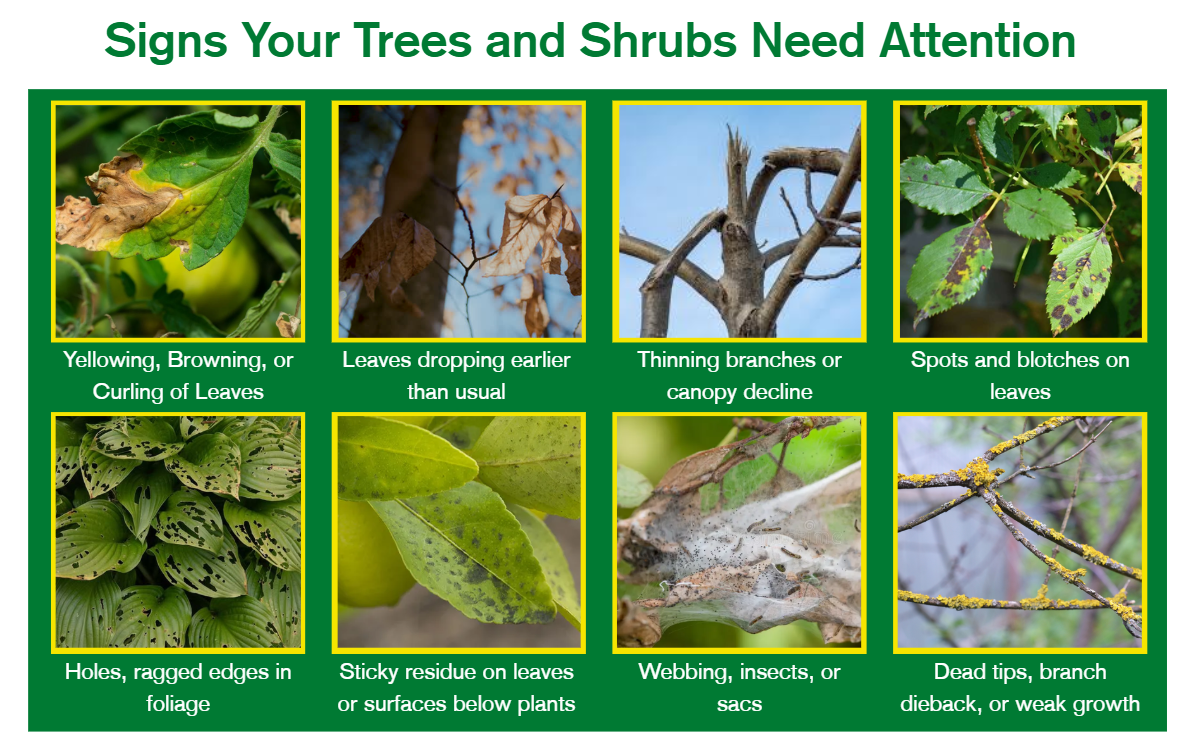
In terms of improving the look of your property, the most important step of treatment is diagnosing the original problem. This graphic can help homeowners distinguish disease and stress on their trees and shrubs.
Common Summer Tree & Shrub Issues
Heat and drought stress
Hot weather can dry out soil quickly, especially around newer plantings, shallow-rooted shrubs, and trees near driveways, sidewalks, or full-sun areas. Signs of heat or drought stress may include wilting leaves, browning leaf edges, curling foliage, thinning canopies, and early leaf drop.
A plant can look dry even when it is not dead. Proper watering and professional care can help support recovery during stressful summer conditions.
Overwatering and poor drainage
Summer storms can bring heavy rain in a short period. If soil stays wet for too long, roots may struggle to get oxygen. This can lead to yellowing leaves, weak growth, root stress, and disease problems.
Low spots, clay-heavy soil, and poorly drained beds are common trouble areas for Virginia landscapes.
Insect damage
Warm weather brings more insect activity. Aphids, mites, scale insects, bagworms, Japanese beetles, lace bugs, and other pests can feed on leaves, stems, or needles. Damage may show up as holes in leaves, sticky residue, speckled foliage, browning needles, webbing, or visible insects on the plant.
Some pests are easy to miss until damage becomes obvious. Regular inspections help catch problems before they spread.
Leaf spots and fungal issues
Virginia’s humidity can create ideal conditions for leaf spot diseases and other fungal problems. You may notice dark spots, yellow halos, powdery growth, blotchy leaves, or premature leaf drop.
Not every leaf spot means a plant is in danger, but repeated disease pressure can weaken trees and shrubs over time.
Nutrient stress
Trees and shrubs need the right nutrients to maintain healthy growth, strong color, and better stress tolerance. Pale leaves, slow growth, and thinning canopies may point to nutrient issues, compacted soil, poor root conditions, or a combination of problems.
Summer Care Tips for Virginia Homeowners
Water deeply when rainfall is limited. Shallow watering encourages shallow roots, while deeper watering helps moisture reach the root zone.
Mulch properly. A light mulch layer helps conserve soil moisture and regulate temperature. Keep mulch away from trunks and stems to prevent rot and pest problems.
Check plants weekly. Look under leaves, along stems, and near branch tips for insects, spotting, discoloration, or webbing.
Avoid heavy pruning during extreme heat. Removing too much growth in hot weather can add stress. Save major shaping for the proper season.
- Do not ignore early symptoms. A few yellow leaves may not be serious, but spreading damage, fast leaf drop, or visible insects should be checked.
What We Treat
With the knowledge of local service leaders and agronomists, we first look to diagnose the problem and disease correlated to your tree and shrubs. From then on, we create a customized application program fit to your needs. These applications include: IPM (Integrated Pest Management), which protects your trees and shrubs from damaging insects, and Deep Root Fertilization, which applies nutrients to your trees and shrubs, further protecting them from disease. These applications, paired with our lawncare plan, result in a flourishing property image you can be proud of.