

Lime Your Lawn: How Lawn Care Services Use Lime
Topics Index
- Why Soil pH Matters
- What Lime Does for Your Lawn
- How We Decide if Lime is Needed
- When to Add Lime
- Why Choose Virginia Green
- Frequently Asked Questions
Why Soil pH Matters
A lawn can receive the right fertilizer, steady mowing, and proper watering but still struggle if the soil pH is off. In many Virginia lawns, soil can become too acidic over time especially if it has a red color. Rainfall, leaching, soil type, and normal lawn care activity can all affect pH.
When soil becomes too acidic, grass may have trouble using the nutrients already in the ground. That means fertilizer applications may not work as well as they should. The lawn may look thin, pale, patchy, or slow to respond even when it is being treated.
Correcting soil pH helps create a better growing environment for turf roots. That is where lime comes in. It helps maximize the nutrients the lawn is receiving.
What Lime Does for Your Lawn
Homeowners often ask, “what does the lime do to the soil? and "how does it make a difference?” Lime helps raise the pH of acidic soil so turf can access nutrients more efficiently. It does not replace fertilizer, but it helps fertilizer and naturally available nutrients work better so you get more out of your applications.
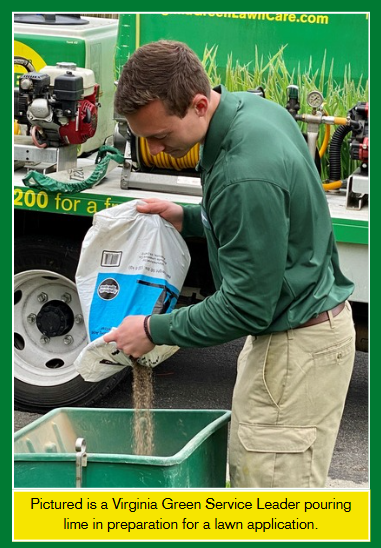
Virginia Green uses dolomitic lime, which works as a lime soil amendment while also adding magnesium and calcium. Magnesium supports chlorophyll production, which plays a role in the green color and overall health of the grass.
When soil pH is in the right range, the lawn has a better chance to develop strong roots, use nutrients properly, and respond well to a complete lawn care program.
How We Decide if Lime is Needed
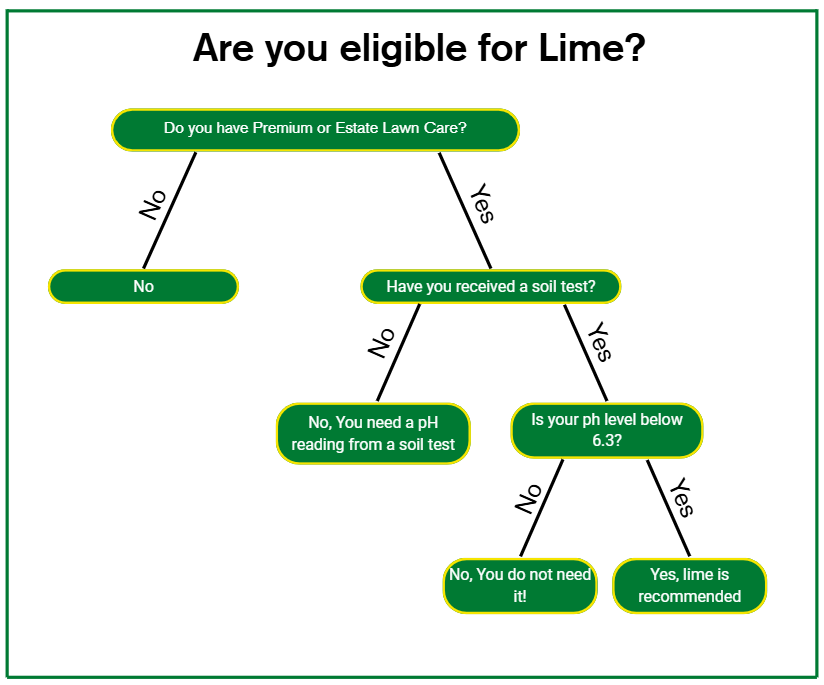
At Virginia Green, almost all of our lawncare services start with our free soil tests. With our soil tests, we can accurately measure your soils pH levels to determine if corrective lime is needed and how much. A specifically targeted application is better than applying lime without knowing the lawns true needs.
This matters crucially because adding too much lime can push pH too far in the wrong direction. A logically targeted application is better than applying lime without knowing the lawns true needs.
When to Add Lime
Lime works gradually, so it is often applied as part of a long-term solution rather than just a quick cosmetic fix. It can take months to work so the earlier, the better. In terms of time of year, Fall and cooler parts of the year can be good times for lime applications because the material has time to begin adjusting soil pH before the next active growing season. Lime may also be recommended at other times based on test results, lawn condition, and your specific lawn program.
The key is timing lime to soil needs, not applying it just because the lawn looks weak. Thin turf can come from many causes, and falsely applying lime would likely have a minimal effect on your lawn.
Why Choose Virginia Green?
As explained earlier, our lime differentiates itself from others with its added benefit of magnesium and calcium, which optimizes plant health for your lawn. Additionally, the application of lime can directly align and benefit the effects of your regular Virginia Green lawn care treatments. With lime enhancing the lawns' overall ability to bring in nutrients, this directly correlates with the solutions we apply on your lawn already.
Frequently Asked Questions
Still comparing warm season lawns and cool season lawns? These common questions can help clarify how each turf type performs and what to expect from your lawn care program throughout the year.