
What Repels Fleas? Natural and Effective Options for Your Yard
- The Quick Answer
- Why Fleas Become a Yard Problem
- Natural Ways to Make Your Yard Less Flea-Friendly
- Where Natural Methods Fall Short
- Why Flea and Tick Control Matters
- Frequently Asked Questions
The Quick Answer
If you are asking, “what repels fleas,” start with the conditions fleas prefer. Fleas are more likely to become a problem in warm, humid, shaded areas where pets, wildlife, and tall grass create the right environment for activity.
Natural methods can help make your yard less attractive to fleas, but they usually work best as prevention, not as a complete fix for an active infestation. Good mowing habits, leaf cleanup, pet-area maintenance, and reducing damp, shaded hiding spots can all help lower flea pressure around the lawn.
Why Fleas Become a Yard Problem
Fleas often enter the yard through pets, wildlife, or shaded areas where animals spend time. Once they find the right conditions, they can become frustrating fast. Warmth, moisture, organic debris, tall grass, and protected resting spots all help fleas survive.
In Virginia, flea activity often becomes more noticeable during warm seasons when families and pets spend more time outside. Lawns with heavy shade, overgrown edges, leaf buildup, or frequent animal traffic may see more issues than open, sunny turf that dries out faster.
A healthy, maintained yard does not guarantee fleas will never show up, but it gives them fewer places to hide.
Natural Ways to Make Your Yard Less Flea-Friendly
- Keep the lawn mowed
Shorter, maintained grass helps reduce shaded, humid hiding areas. The same goes for ticks; keeping grass mowed short in high-use areas such as seating spaces, playgrounds, and fire pits can reduce tick habitat near the places families and pets spend time.
- Remove leaf piles and yard debris
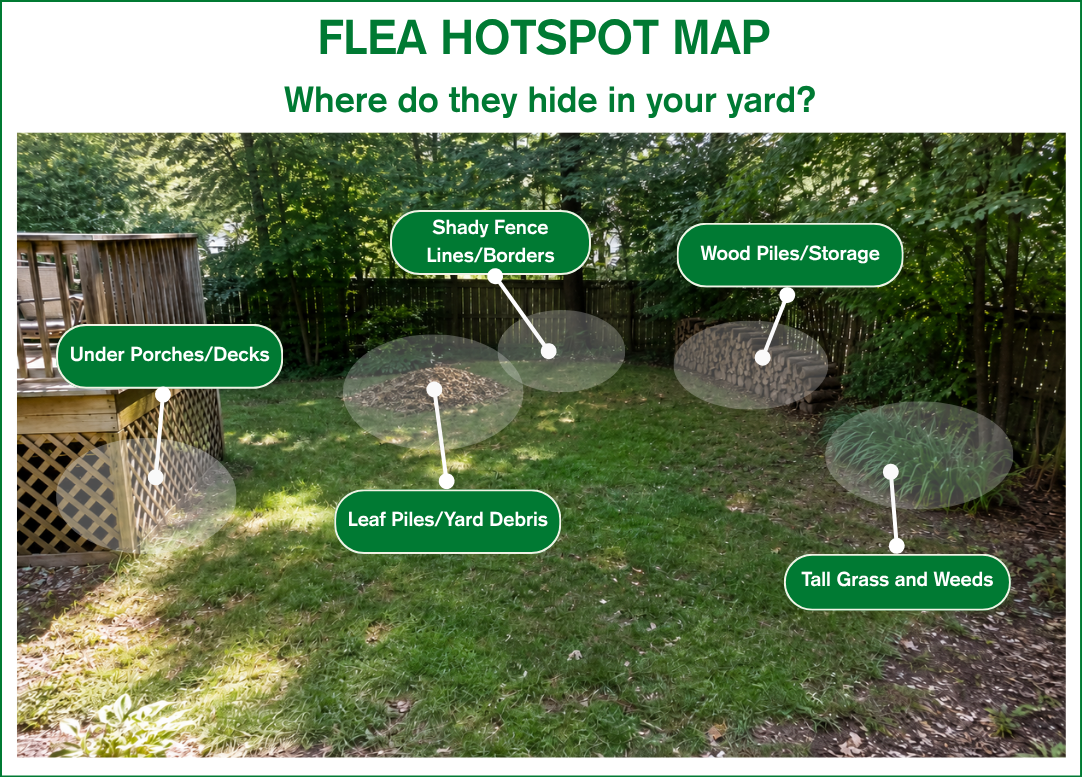
Fleas and ticks both benefit from protected, damp areas. Remove leaf piles, brush, and excess yard debris from areas where pets rest or children play. If you keep wood piles or natural areas, place them away from patios, dog runs, play areas, and outdoor seating.
- Focus on pet traffic zones
Check the areas where pets spend the most time. Fence lines, shaded corners, under decks, dog paths, kennels, and resting spots can become pest pressure areas. Keep these zones clean, trimmed, and dry when possible.
- Reduce excess moisture
Fleas do better in humid, protected environments. Avoid overwatering, fix drainage issues, and let sunny areas dry between watering cycles. To learn proper water techniques, click here.
- Use repellents safely
Personal insect repellents can help protect people from biting pests when used according to the label. While repellents can prove useful, they do not replace yard-level flea control.
Where Natural Methods Fall Short
Natural yard care steps can reduce flea-friendly conditions, but they may not stop an established flea problem. Fleas can reproduce quickly, and pets or wildlife can keep reintroducing them to the yard.
Plants, homemade sprays, and scent-based methods may sound appealing, but homeowners should be careful about relying on them as the main solution. Many “natural” products still need careful use around pets, children, and beneficial insects. Some may have limited impact outdoors, especially after rain or irrigation.
If fleas are already active in the yard, a professional flea and tick control program can provide more consistent protection than yard cleanup alone.
Why Flea and Tick Control Matters
Fleas are not just a nuisance. They can bite people and pets, irritate skin, and become a problem around the home if they are carried indoors. Ticks are also a concern because they can spread diseases.
At Virginia Green, we offer consistent, season-long flea & tick control services. These services are aimed at protecting your whole property, as well as your family and pets.