

How to Keep Your Lawn Hydrated During the Summer Months
Topics Index
- Why Summer Watering Matters in Virginia
- How Much Water Your Lawn Needs
- Best Time to Water Grass in the Summer
- How Long to Water Grass in Summer
- Watering Tips for Fescue, Bluegrass, and Bermuda
- Common Summer Watering Mistakes
- Keep Your Lawn Hydrated Without Overwatering
- Frequently Asked Questions
Want Stronger Roots?
Why Summer Watering Matters in Virginia
Virginia summers can put a lawn under real stress. Heat, humidity, dry stretches, compacted soil, and heavy afternoon sun can all pull moisture from the turf faster than many homeowners expect.
At Virginia Green, we look at watering as one of the most important parts of summer lawn care. Without watering, the effects of our services are minimized greatly, and your lawn cannot reach its full potential. Additionally, lack of proper watering can cause grass thinning, discoloration, dormancy, and increased susceptibility to weeds and disease.
Overall, the goal is not to water every day. The goal is to water deeply enough to support stronger roots.
How Much Water Your Lawn Needs
Overall, we recommend watering deeply but infrequently to promote strong roots and help reduce weed pressure. For most lawns, the target is about 1 to 1.5 inches of water per week, including rainfall.
A good summer watering schedule is usually two to three watering days per week. Watering ½ to ¾ of an inch per session, two to three times per week is a good schedule to follow. This helps water move into the soil without creating unnecessary runoff.
Homeowner Tip: One of the best lawn care tips for summer heat is to measure your irrigation instead of guessing. Place rain gauges, tuna cans, or flat-bottom containers around the lawn while your sprinkler runs. If each container catches about the same amount, your coverage is even. If one area fills faster than another, your sprinkler pattern may need adjustment.
Best Time to Water Grass in the Summer
The best time to water grass in the summer is early morning, ideally between 4 AM and 7 AM. We recommend this window because temperatures are cooler and evaporation loss is lower.
Morning watering gives moisture time to soak into the soil while allowing grass blades to dry during the day. That matters because lawns that stay wet overnight are more likely to develop disease issues during humid Virginia weather.
Avoid watering in the heat of the day when more water is lost to evaporation. Evening watering may seem convenient, but it can keep leaf blades wet too long.
How Long to Water Grass in Summer
Many homeowners ask how long they should water grass when they do have their watering system set-up, however, the answer depends on your sprinkler system, water pressure, soil type, slope, and coverage.
Instead of setting a timer and hoping it is right, measure the output. Run your sprinkler and track how long it takes to collect ½ inch of water in a rain gauge or tuna can. That tells you how long your system needs to run for one watering session.
If water starts running down the driveway or pooling in low spots, split watering into shorter cycles. For example, water for part of the total time, let the lawn absorb the moisture, then finish the cycle later. This is especially helpful on compacted or clay-heavy Virginia soils.
Watering Tips for Fescue, Bluegrass, and Bermuda
Tall fescue and bluegrass can struggle during extended summer heat. In times of excessive drought, higher watering amounts may be needed to keep fescue or bluegrass from going dormant.
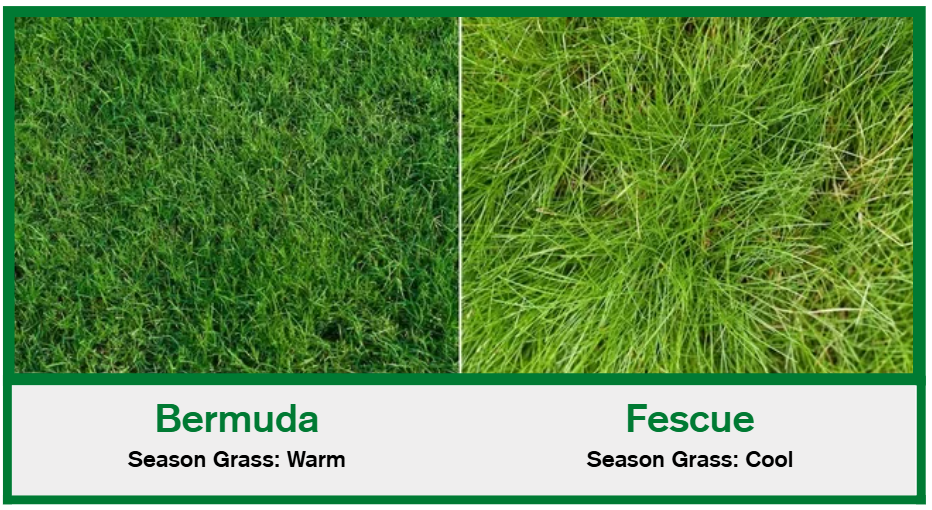
Bermuda grass handles heat better than many cool-season lawns, but it still needs moisture to stay actively growing and green. If you are wondering how much water does bermuda grass need per week, a practical summer target is usually around 1 inch of water per week, including rainfall, when you want it to stay green and growing. Bermuda can tolerate dry periods better than fescue, but drought stress can still cause browning or dormancy.
Good summer lawn watering advice starts with knowing your grass type. A fescue lawn in full sun may need a different plan than a bermuda lawn or a shaded area that holds moisture longer. Click here to learn more about warm season vs cool season grasses.
Common Summer Watering Mistakes
Watering every day is one of the biggest mistakes homeowners make. Daily watering encourages shallow roots, which makes grass less prepared for heat stress.
Another common mistake is watering too lightly. A few minutes of sprinkler time may wet the leaf blades without sending water deep enough into the soil. That does little for long-term root health.
Watch for these summer watering problems:
- Water running off instead of soaking in
- Dry patches in the lawn where sprinklers do not reach
- Mushy soil from overwatering
- Grass blades folding, wilting, or turning bluish-gray
- Footprints that stay visible after walking across the lawn
These signs can help you adjust your schedule before the lawn declines further.
Keep Your Lawn Hydrated Without Overwatering
A hydrated summer lawn does not come from watering more often. It comes from watering the right way.
Water deeply. Water early. Measure your sprinkler output. Adjust for rainfall. Avoid daily watering. Pay attention to the signs your lawn is giving you.
With the right summer lawn watering advice and a professional lawn care plan, your Virginia lawn has a better chance to stay healthier through the hottest months of the year.