Signs Your Lawn is Compacted
Topics Index
- Why it's Important to Take Care of Compaction
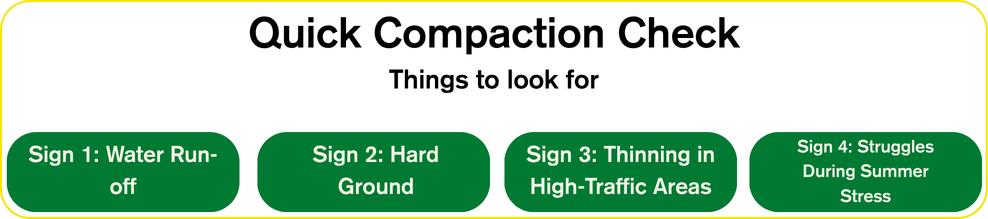
- Sign 1: Water Runs Off Instead Of Soaking In
- Sign 2: The Ground Feels Hard
- Sign 3: Grass Thins in High-Traffic Areas
- Sign 4: The Lawn Struggles During Summer Stress
- How Deep Root Aeration Helps
- The Virginia Green Difference
- Frequently Asked Questions
Why it's Important to Take Care of Compaction
Compaction happens when soil particles press tightly together. In Virginia, heavy foot traffic, construction activity, and repeated use can contribute to soil compaction. Once the soil becomes compacted, roots have less room to grow, and water, air, and nutrients have a harder time reaching the root zone.
Soil compaction reduces airflow, water infiltration, and percolation. For a lawn, that means the root zone becomes less supportive of healthy growth.
Sign 1: Water Runs Off Instead of Soaking In
Compacted soil can reduce water infiltration and drainage, which may contribute to runoff or water collecting on the surface.
This can confuse homeowners because the lawn may look wet right after watering but still show drought stress later. The issue is that the water may not move deeply enough into the root zone. Compacted soil can limit moisture from soaking in, so the roots may not receive the full benefit of watering.
If certain areas stay wet on the surface but dry out quickly afterward, compaction may be part of the problem.
Sign 2: The Ground Feels Hard
A compacted lawn often feels firm underfoot. You may notice that the soil feels packed down when you walk across it, especially near walkways, gates, driveways, patios, and play areas.
This is especially common in Virginia lawns with heavy clay soil. Clay can hold nutrients well, but it can also compact easily when exposed to repeated pressure from mowing, foot traffic, pets, or construction activity. To learn more about clay soil, click here.
Sign 3: Grass Thins in High-Traffic Areas
Thin grass near high-use areas is another common sign of soil compaction. Turf around gates, sidewalks, patios, pet paths, and children’s play areas often experiences the most wear. As the soil becomes more compacted, the grass can lose density and struggle to recover.
These areas may look worn even when the rest of the lawn appears healthier. The grass may grow more slowly, appear lighter in color, or develop small bare spots. Once turf thins, weeds have more open space to germinate.
Sign 4: The Lawn Struggles During Summer Stress
Summer heat can make the effects of compaction easier to notice. A compacted lawn may brown faster during dry weather because root growth is limited. When roots remain shallow, the turf may struggle to access moisture as temperatures rise.
You may also notice that compacted areas recover more slowly after heat, drought, or heavy use. Even with watering, the lawn may remain dull, thin, or uneven because moisture and oxygen are not moving through the soil effectively.
How Deep Root Aeration Helps
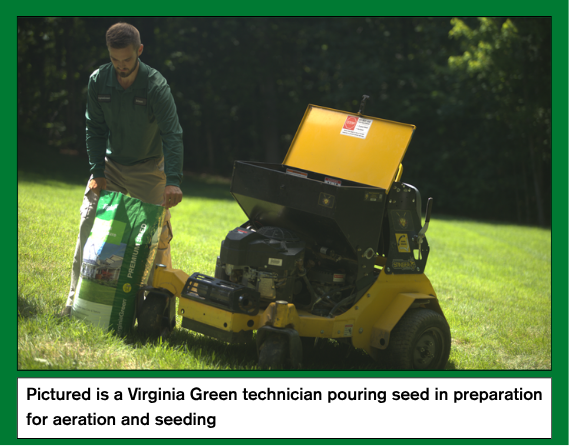
Deep-root aeration removes small plugs of soil from the lawn. These openings help relieve compaction and give the root system more room to grow. They also improve the movement of air, water, nutrients, and seed into the soil.
At Virginia Green, we use deep-root aeration to produce deeper cores and maximize seed-to-soil contact.
The Virginia Green Difference
At Virginia Green, we approach aeration and seeding differently:
- We use an exclusive custom blend of 100% weed-free seed engineered for Mid-Atlantic soil conditions.
- We use specialized equipment to core deeper into the soil, distribute seed more evenly, and maximize seed-to-soil contact for better germination.
- Our technicians take the time to focus on borders, corners, and other high-visibility areas that others may rush past, helping create a polished result across your entire lawn.
- We provide a complimentary follow-up visit and a bag of touch-up seed to help ensure your lawn continues to thrive after treatment.
Every lawn care, pest control, and tree and shrub program is backed by our 100% satisfaction guarantee. Not happy with the results? We will re-treat your yard free of charge for as long as it takes to get it right.