Aeration for New-Construction Lawns in Virginia
Virginia continues to be one of the country’s most active real estate markets, with new neighborhoods and residential developments being built every year. Many new homes feature freshly installed sod or newly seeded lawns that look attractive at first but may struggle without proper establishment and ongoing care. This article explains how Virginia Green’s aeration services, along with seeding when appropriate, can support healthier turf on new-construction properties.
Topics Index
- Why New-Construction Lawns Struggle
- How Construction Compacts the Soil
- Why Aeration Matters for New Lawns
- Best Time for Aeration and Overseeding
- How We Can Help You
- Frequently Asked Questions
Why New-Construction Lawns Struggle
During construction, heavy equipment moves across the property, soil is graded, topsoil may be disturbed, and clay-heavy subsoil can end up close to the surface. Once the home is finished, sod or seed may be installed over soil that is compacted, low in organic matter, or unevenly prepared. These conditions can create long-term soil health problems.
How Construction Compacts the Soil
Healthy turf needs air, water, nutrients, and room for roots to grow. Construction activity can press soil particles tightly together, especially in Virginia’s clay-based soils. Compacted soil limits root development and makes it harder for water and oxygen to move into the root zone.
You may have compacted soil if your lawn shows:
- Thin or patchy turf
- Hard ground
- Standing water after rain
- Fast drying during hot weather
- Weak color or uneven growth
- Grass that struggles even with watering
New-construction lawns are also more likely to have buried debris, uneven soil depth, drainage issues, and poor seed-to-soil contact from the original installation.
Why Aeration Matters for New Lawns
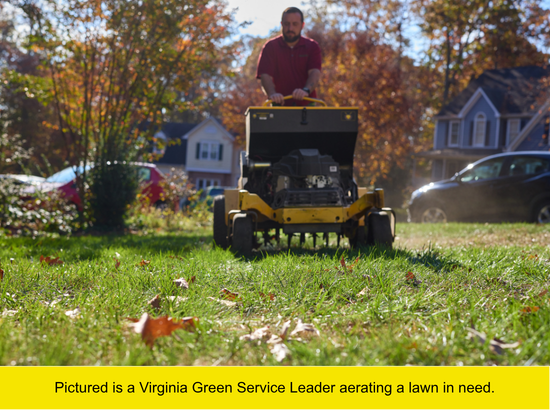
At Virginia Green, we use deep root aeration services. Deep root aeration removes small plugs of soil from the lawn. These openings help relieve compacted areas and allow air, water, and nutrients to move deeper into the soil. For new-construction lawns, this can be especially helpful because the turf is often growing in disturbed or compacted soil.
Best Time for Aeration and Overseeding
For many cool-season Virginia lawns, early fall is the best time for aeration and overseeding. Temperatures are cooler, the soil is still warm enough for seed germination, and new grass has time to establish before winter.
For warm-season lawns, late spring through early summer is the best time for aeration because the grass is actively growing during this period.
How We Can Help You
With our local roots, Virginia Green knows the ins and outs of Virginia weather, soil, and overall conditions. We work with licensed agronomists to manufacture customized aeration and seeding services tailored to your lawn/new property.