

Common Lawn Diseases in Virginia and How to Treat them Quickly
Topics Index
Why Lawn Diseases Show Up in Virginia
Virginia lawns deal with a tough mix of heat, humidity, heavy rain, clay soil, and summer stress. When grass stays wet overnight or struggles through hot weather, fungal diseases can move quickly through the turf.
In terms of additional factors, disease pressure often increases when grass is stressed by poor drainage, compacted soil, dull mower blades, improper watering, low airflow, or unbalanced fertility.
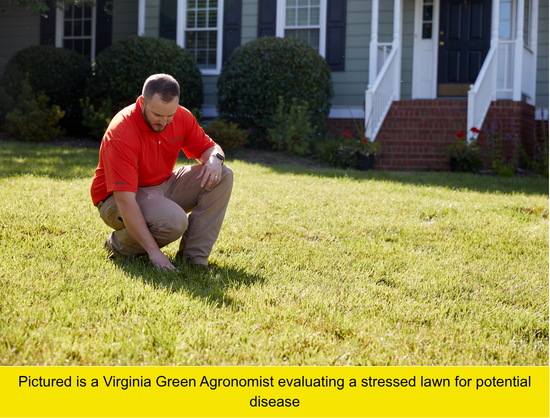
A good lawn disease control plan starts with correct identification. Brown patches can come from fungus, drought, insects, pet damage, mower stress, or soil problems. Treating the wrong issue wastes time and can even make the lawn worse.
If you have or suspect any of the diseases below, it would be best to call Virginia Green. We can send out a certified turf professional to your home to diagnose the problem and give you a quote.
Brown Patch
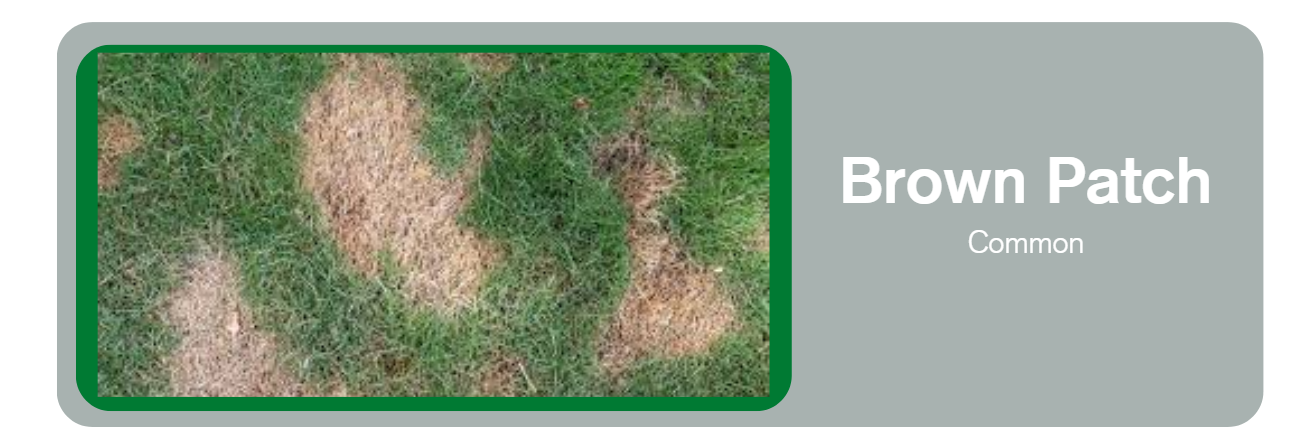
Brown patch is one of the most common summer lawn diseases in Virginia, especially in tall fescue lawns. It often appears during hot, humid weather when nighttime temperatures stay warm and leaf blades remain wet for long periods.
You may notice circular or irregular brown areas in the lawn. In the morning, some patches may have a grayish or smoky edge. Individual grass blades may show tan lesions with darker borders.
Brown patch is usually a foliar disease, meaning it damages the blades more than the roots. A lawn can recover when conditions improve, but repeated outbreaks can thin the turf and leave room for weeds.
Dollar Spot
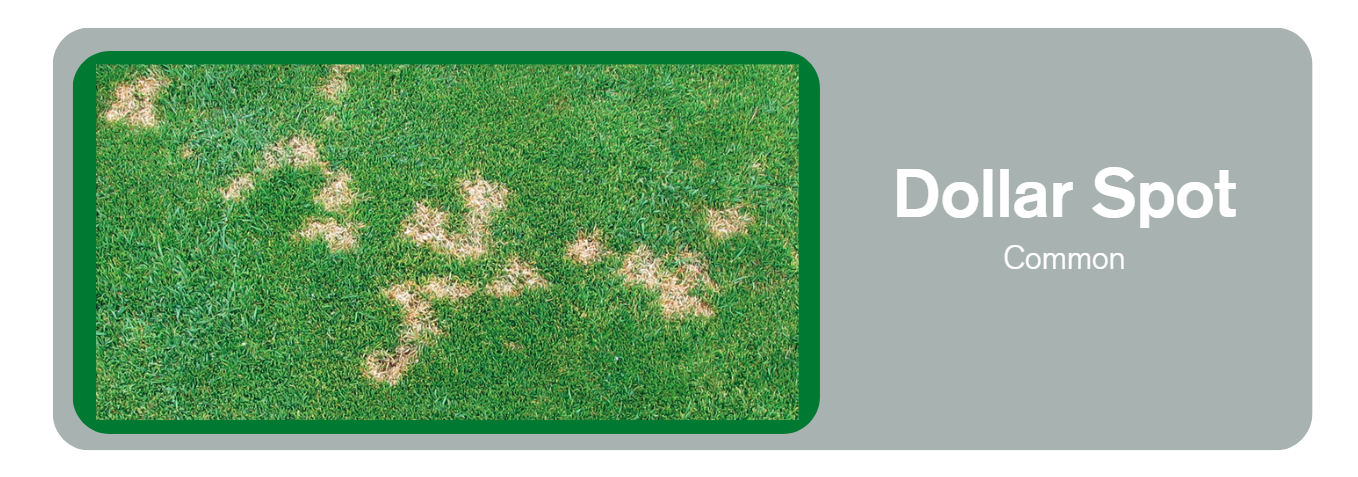
Dollar spot can show up as small, straw-colored spots that may grow together into larger damaged areas. It often becomes more noticeable when the lawn is under stress from low fertility, dry soil, heavy dew, or humid weather.
On individual grass blades, dollar spot may create light tan hourglass shaped lesions with reddish-brown edges. In the early morning, you may see fine, cobweb-like growth on affected areas before the dew dries.
Proper fertilization, watering, mowing, and thatch management all play a role in reducing dollar spot pressure.
Pythium Blight
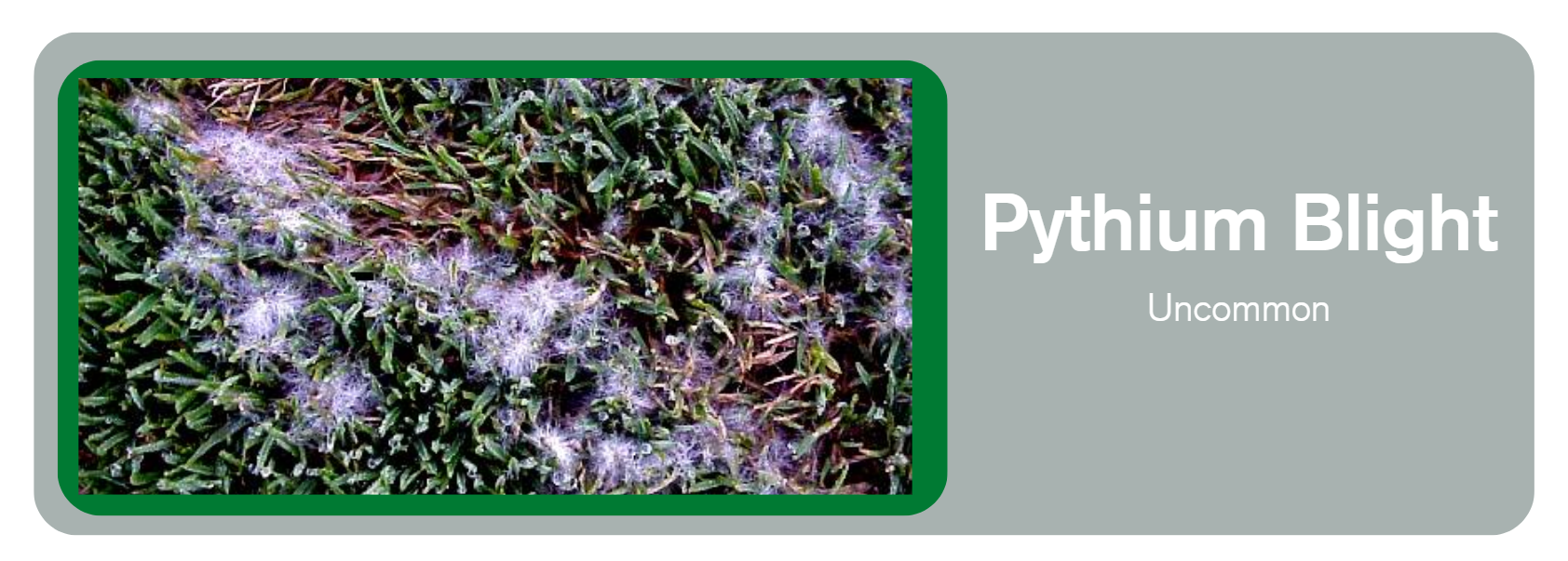
Pythium blight is less common than brown patch but can be aggressive when conditions are right. It favors hot, humid weather, excessive moisture, poor drainage, and lush, tender growth.
Early symptoms may look like small greasy or water-soaked patches. In humid conditions, the turf may look matted or slimy. This disease can move quickly, especially in low areas where moisture collects. Unlike Brown Patch, it does not have a defined border. It can even be tracked on mower tires.
Because Pythium can spread fast, homeowners should avoid dragging hoses, mowing through wet infected areas, or overwatering when symptoms appear.
Frequently Asked Questions About Lawn Disease
What are the most common lawn diseases in Virginia?
How do I know if my lawn has fungus?
What causes lawn disease?
Does watering at night cause lawn disease?