

Why Do Mushrooms Grow in My Yard? Causes and Control Methods
Topics Index
- The Short Answer
- What Mushrooms Usually Mean
- The Yard Diagnosis: What to Look For
- How to Remove Mushrooms Safely
- How to Prevent Fungi Conditions that Lead to Mushrooms
- Final Takeaway
- Frequently Asked Questions
The Short Answer
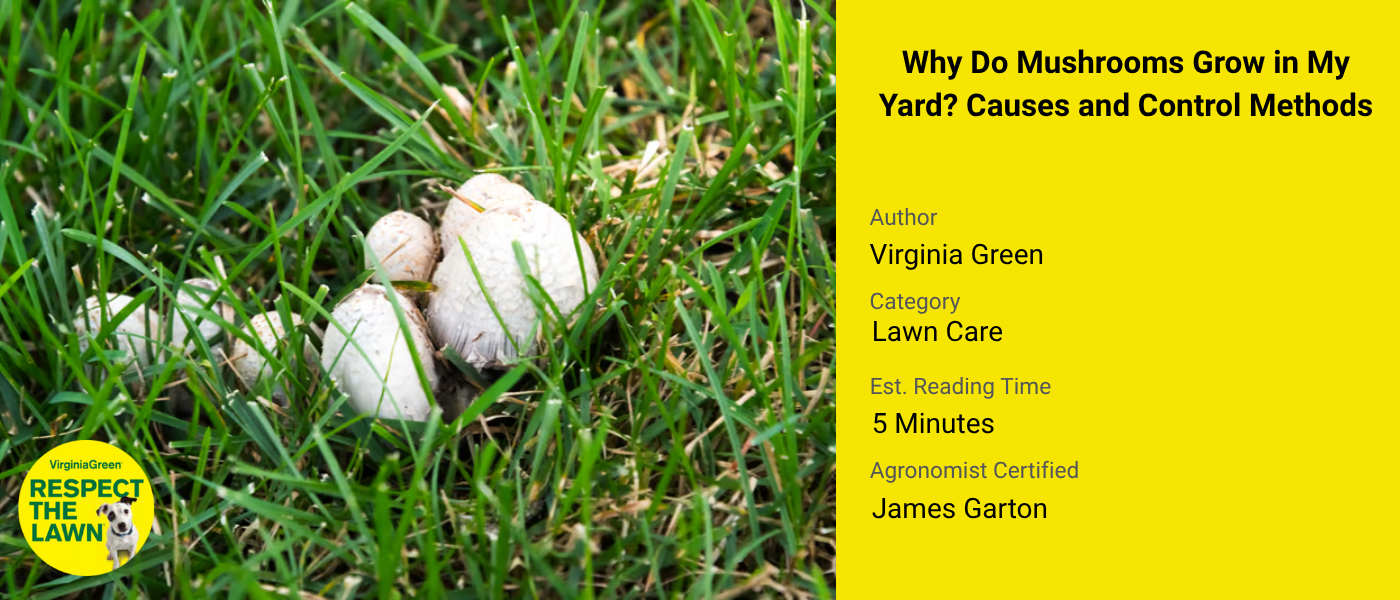
If you are asking, “why do mushrooms grow in my yard,” the answer usually comes down to moisture, shade, and organic matter in the soil. Mushrooms are the visible fruiting bodies of fungi living below the surface. They often appear after rain, overwatering, humid weather, or in areas with decomposing roots, buried wood, heavy thatch, or poor drainage.
In many cases, mushrooms are not directly harmful to the lawn. They are often a sign that fungi are breaking down organic material in the soil. That process can help return nutrients to the ground. The problem is that mushrooms can be unsightly, may worry homeowners with pets or children, and can sometimes point to wet or poorly drained lawn conditions.
What Mushrooms Usually Mean
Mushrooms do not appear out of nowhere. They grow when the underground fungal network has the right conditions to produce them.
Common triggers include:
- Several days of rain
- Overwatering
- Shaded areas that stay damp
- Poor drainage
- Heavy thatch
- Decaying roots or buried wood
- Old tree stumps below the soil
- Thick mulch near lawn edges
- Humid summer weather
In Virginia, these conditions are common during warm, wet stretches. A lawn may look normal one day, then have mushrooms scattered across the turf the next morning.
The Yard Diagnosis: What to Look For
If mushrooms appear after rain
This is usually temporary. Moisture triggers the fungi to produce mushrooms. Once the area dries out, the mushrooms often disappear on their own.
If mushrooms keep returning in the same spot
There may be a buried organic source below the soil, such as old roots, construction debris, or decaying wood. The fungi will continue feeding on that material until it breaks down.
If mushrooms form a ring
This may be fairy ring. Fairy ring can show up as circles or arcs of mushrooms, darker green turf, or stressed grass. Penn State’s Turfgrass Pest Diagnostic Lab explains that fairy ring fungi live in thatch and soil and can create rings of mushrooms, stimulated green growth, or wilted turf depending on the type.
If the lawn is thinning near the mushrooms
The mushrooms may not be the main issue. The real problem could be poor drainage, compacted soil, disease pressure, low sunlight, or weak turf density. A lawn evaluation can help separate a cosmetic mushroom issue from a larger lawn health problem.
How to Remove Mushrooms Safely
For most home lawns, the best short-term option is simple removal.
Pick, rake, or mow over mushrooms before they spread more spores. If pets or children use the yard, remove mushrooms as soon as you see them and dispose of them in a sealed bag. Do not eat wild mushrooms from the lawn. Many mushrooms are difficult to identify, and some can be toxic.
Chemical treatments are usually not the best answer for ordinary lawn mushrooms. The visible mushroom is only part of the organism. The main fungal network lives underground, so spraying the surface rarely solves the reason mushrooms keep appearing.
How to Prevent Fungi Conditions That Lead to Mushrooms
You cannot remove every fungus from the soil, and you should not try to. Fungi are part of a living lawn ecosystem. The better goal is to manage the conditions that lead to unwanted mushroom growth.
To reduce mushroom activity:
- Water deeply but less often
- Water early in the morning
- Avoid watering at night
- Improve drainage in low spots
- Remove old stumps, roots, and buried wood when possible
- Rake up heavy leaf cover
- Manage thatch buildup
- Improve sunlight by trimming dense shade where appropriate
- Aerate compacted areas
- Keep turf thick through proper mowing, fertilization, and seeding
If you are researching how to prevent fungi, start with moisture control. Most mushroom problems become worse when lawns stay wet for too long.
Final Takeaway
Mushrooms are usually a sign of moisture and organic matter in the lawn, not a sign that the grass is ruined. They often appear after rain, in shaded areas, or where underground fungi are breaking down old roots and debris.
The best control method is to remove visible mushrooms, reduce excess moisture, improve airflow and drainage, and build thicker turf. If the lawn is also thinning, holding water, or showing disease-like symptoms, Virginia Green can help identify the larger issue and recommend the right next step.
To learn more about lawn care services, visit virginiagreen.com or call 804-285-6200.