

Warm Season vs. Cool Season Grass

Understanding the difference between warm season lawns and cool season lawns is one of the most important parts of building a successful lawn care plan. Each grass type grows at different times of the year, responds differently to heat and cold, and requires a unique approach to seasonal maintenance. Choosing the right one can make the difference between a lawn that struggles through the year and one that stays thick, resilient, and attractive.
Across transition zone states like Virginia, North Carolina, and parts of Maryland, homeowners can grow either type of grass depending on the property and expectations. The key is understanding how each lawn type behaves and how your local conditions influence long-term performance. Once you know the difference between warm season and cool season lawns, you can make smarter decisions about mowing, watering, fertilization, and overall lawn care.
Topics Index
- Warm Season Lawns vs. Cool Season Lawns: Key Differences
- Choosing Between Warm Season and Cool Season Lawns
- Lawn Care Strategies for Each Grass Type
- Frequently Asked Questions
Warm Season Lawns vs. Cool Season Lawns: Key Differences
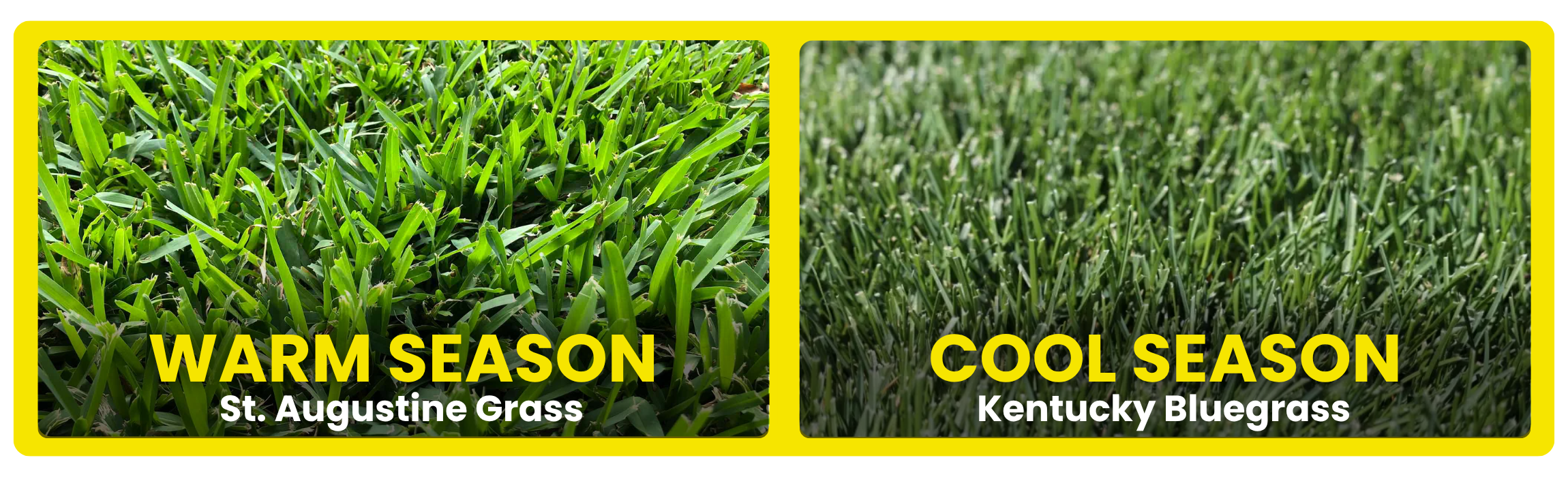
The biggest difference between warm season lawns and cool season lawns is when they actively grow. Warm season grasses thrive when temperatures rise in late spring and summer. They are built to handle strong sunlight, prolonged heat, and periods of drought much better than cool season varieties. Common grasses in this category include Bermudagrass, Zoysiagrass, Centipedegrass, and St. Augustinegrass. These lawns often perform exceptionally well during the hottest stretch of the year, but they typically go dormant and turn brown once cooler weather arrives.
Cool season lawns, by contrast, grow most actively during spring and fall when temperatures are moderate. These grasses are often favored for their rich color, dense appearance, and ability to stay greener for longer stretches of the year. Common cool season grasses include tall fescue, Kentucky bluegrass, and perennial ryegrass. In many residential settings, tall fescue is especially popular because it offers a strong balance of appearance, adaptability, and wear tolerance.
In the transition zone, the choice between these lawn types matters because neither one is perfect in every season. Warm season lawns excel during summer but lose winter color. Cool season lawns offer longer-lasting color and a traditional lawn look, but they require more support during heat stress. That is why your lawn care plan should always be built around the type of turf you have and the conditions your property experiences throughout the year.
Choosing Between Warm Season and Cool Season Lawns
When deciding between warm season lawns and cool season lawns, it helps to look beyond appearance alone. The right decision depends on how much sun your lawn receives, how much maintenance you want to perform, and what kind of performance you expect across the seasons. Homeowners who want strong summer durability and reduced water demand may lean toward warm season lawns. These grasses are often a smart fit for properties with full sun and intense summer exposure.
On the other hand, homeowners who prefer a lawn that stays greener longer and fits a classic residential look often favor cool season lawns. In places like Virginia and surrounding states, cool season lawns are common because they provide dependable spring and fall growth and can deliver strong curb appeal for much of the year. They do require smart lawn care practices in summer, but they are often the best fit for homeowners who prioritize appearance and density.
Every property is different. Shady conditions, drainage patterns, soil quality, traffic levels, and irrigation access all influence which grass type will perform best. A lawn that gets full afternoon sun may behave very differently from one with mixed shade. That is why a strong lawn care program should always be customized to the property rather than treated as one-size-fits-all.
Lawn Care Strategies for Each Grass Type
Effective lawn care begins with understanding when your grass is actively growing. Warm season lawns need most of their fertilization, mowing adjustments, and performance-focused treatments during late spring and summer. Because they are naturally adapted to heat, these lawns can handle high temperatures better than cool season grasses, but timing remains critical. Applying treatments when the turf is fully active helps maximize density, color, and recovery.
Cool season lawns follow a very different seasonal rhythm. Their strongest growth periods happen in spring and fall, which makes those seasons the ideal time for aeration, overseeding, and nutrient applications. During summer, the focus shifts from growth to protection. Mowing height, watering practices, and soil health all play an important role in helping cool season grass manage heat stress. A healthy, well-maintained cool season lawn can hold up very well, but it needs the right support at the right times of year.
No matter which turf type you have, consistency is what drives results. Lawns respond best when maintenance aligns with seasonal growth patterns rather than reacting after stress appears. A proactive lawn care approach helps improve thickness, reduce weed pressure, strengthen roots, and build better resilience over time.
Frequently Asked Questions About Warm Season and Cool Season Lawns
Still comparing warm season lawns and cool season lawns? These common questions can help clarify how each turf type performs and what to expect from your lawn care program throughout the year.