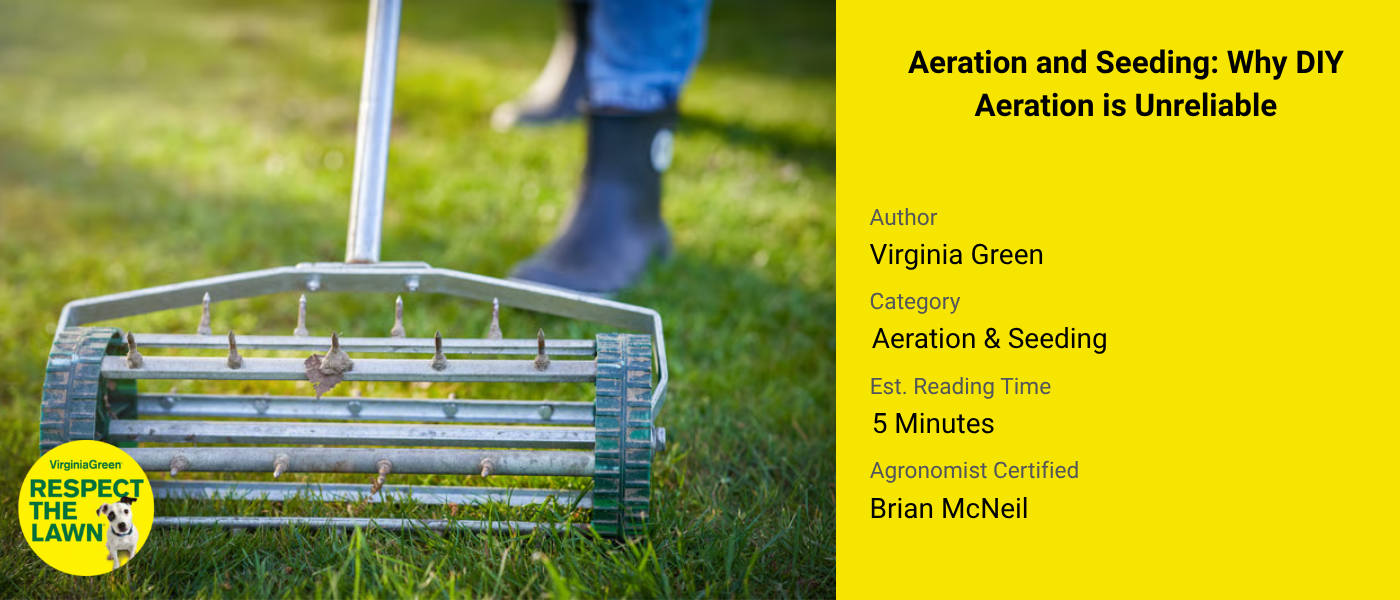
Aeration and Seeding: Why DIY Aeration is Unreliable
Renting an aerator seems simple. Pick up the machine, run it across the lawn, return it, and wait for thicker grass. In reality, DIY aeration can go wrong quickly if the timing, soil conditions, equipment, seed, or watering plan are off. When done correctly, aeration can improve turf density and help the lawn recover from summer stress. When done poorly, it can waste time, money, and a critical growing window.
Topics Index
- Mistake 1: Renting the Wrong Type of Aerator
- Mistake 2: Getting Cool-Season Aeration Timing Wrong
- Mistake 3: Aerating Soil That is Too Dry or Too Wet
- Mistake 4: Making Only One Quick Pass
- Mistake 5: Skipping Seed After Aeration
- Mistake 6: Waiting Too Long to Seed
- Mistake 7: Using Low-Quality or Wrong-Region Seed
- The Bottom Line
- Frequently Asked Questions
Mistake 1: Renting the Wrong Type of Aerator
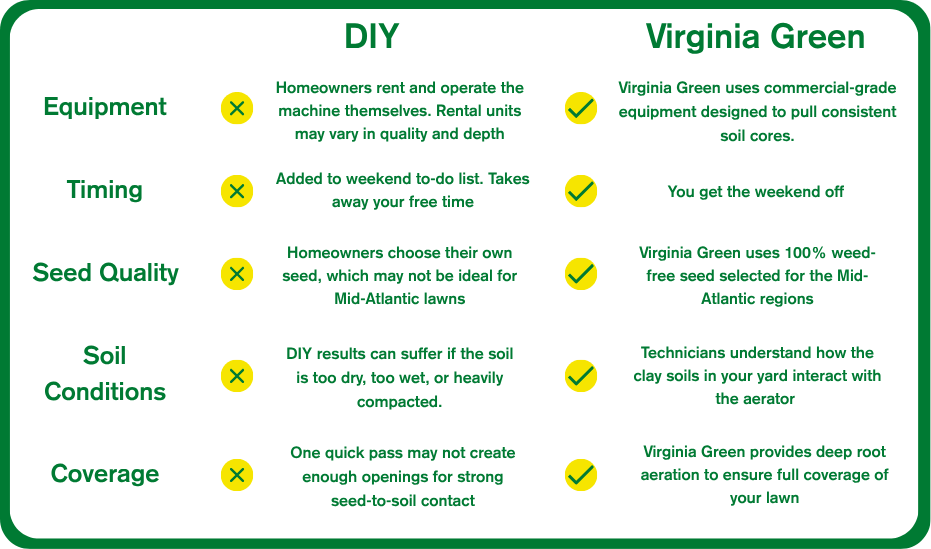
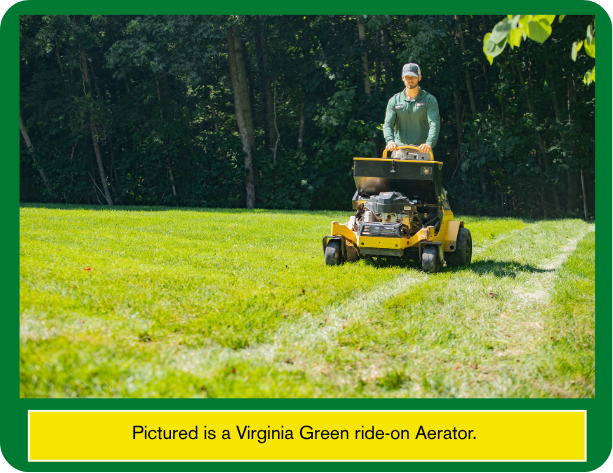
Not all aerators do the same job. A spike aerator pokes holes into the ground but does not remove soil plugs. In compacted Virginia soil, that can push soil tighter around the hole instead of relieving compaction. Virginia Green uses commercial-grade aeration equipment and customized service plans tailored to each lawn’s conditions.
Better move: Use a core aerator, not a spike aerator, for compacted turf.
Mistake 2: Getting Cool-Season Aeration Timing Wrong
When several people rent an aerator together, they may schedule the work around everyone's convenience, which may not align with the correct time to aerate, causing further problems. The timing is crucial because grass needs to be actively growing so it can recover. In Virginia, cool-season lawns such as tall fescue usually benefit most from late summer through early fall aeration and seeding, while warm-season lawns benefit in June through July. To learn more about aeration timing, click here.
Better move: Virginia Green times your aeration based on grass type, regional conditions, and the lawn's active growth period.
Mistake 3: Aerating Soil That is Too Dry or Too Wet
A rented aerator has very inconsistent results. If the ground is too dry, the machine may bounce across the surface and pull shallow cores. If the soil is soaked, the equipment can tear the turf and leave a mess.
Virginia lawns with clay-heavy soil can be especially difficult. Dry clay can be hard as concrete, while wet clay can smear and compact.
Better move: Virginia Green creates customized aeration plans based on each lawn’s unique needs and conditions.
Mistake 4: Making Only One Quick Pass
Many homeowners make one pass over the lawn and assume the job is done. One light pass may not create enough openings for meaningful compaction relief or good seed-to-soil contact.
At Virginia Green, we use deep-root aeration, meaning we cover each area of the lawn not once, but twice.
Better move: Virginia Green uses deep-root aeration methods to help ensure thorough coverage and effectiveness.
Mistake 5: Skipping Seed After Aeration
Homeowners often ask, “Should I seed after aeration?” For cool-season lawns, seeding after aeration is highly recommended. Fescue is a bunch-type grass and benefits from annual aeration and seeding to help fill in thin areas.
Deep-root aeration opens the soil, giving seed better access to the soil surface. Without seed, the lawn may still benefit from compaction relief, but thin areas may remain thin.
Better move: For cool-season lawns, consider pairing aeration with overseeding to help improve turf density and fill thin areas.
Mistake 6: Waiting Too Long to Seed
Homeowners often ask, “How soon after aeration should I seed?” Seed should be applied soon after aeration, while the cores are still on the ground and the aeration holes provide access to exposed soil.
Waiting too long can reduce the benefit because seed performs best when it has direct access to loosened soil.
Better move: Let Virginia Green handle your seeding needs and timing.
Mistake 7: Using Low-Quality or Wrong-Region Seed
Seed quality matters. Cheap seed can include lower-performing varieties, fillers, weed seed, or varieties that are not well suited for Virginia’s transition-zone climate.
At Virginia Green, we use a seed blend developed to support strong germination and performance. Our seed is 100% weed-free and specifically engineered for Mid-Atlantic soil conditions.
Better move: Use Virginia Green's seed blend as part of your aeration and seeding service.
The Bottom Line
Virginia Green’s aeration and seeding service is designed to save homeowners the equipment hassle and improve results. We include:
- We use an exclusive custom blend of 100% weed-free seed engineered for Mid-Atlantic soil conditions.
- We use specialized equipment to core deeper into the soil, distribute seed more evenly, and maximize seed-to-soil contact for better germination.
- Our technicians take the time to focus on borders, corners, and other high-visibility areas that others may rush past, helping create a polished result across your entire lawn.
- We provide a complimentary follow-up visit and a bag of touch-up seed to help ensure your lawn continues to thrive after treatment.
- Every lawn care, pest control, and tree and shrub program is backed by our 100% satisfaction guarantee. Not happy with the results? We will re-treat your yard free of charge for as long as it takes to get it right.