

Lespedeza
Also known as the Japanese clover, Lespedeza is widely distributed along the eastern and southern United States. Distinguishable by its three leaves and occasional pink and purple flowers, Lespedeza can be found all year long. Due to its invasive nature, it is critical to spot this weed early.
Lespedeza (Lespedeza Striata)
Winter Annual, Summer Annual, Perennial
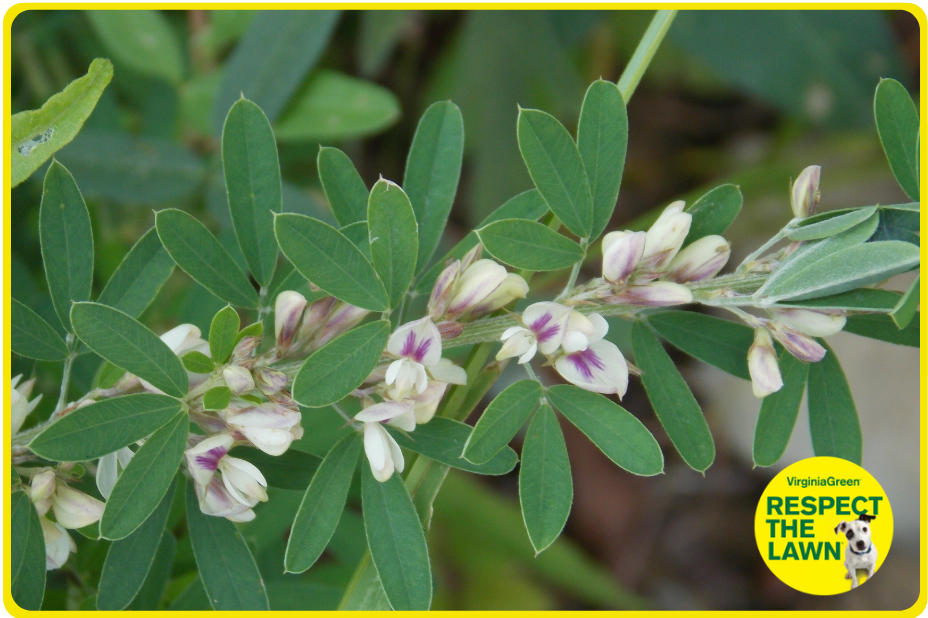
Lespedeza has inconspicuous purplish flowers forming mats of fifteen to eighteen inches in diameter. This weed has firm and woody stems. Its leaves consist of three oblong leaflets (trifoliolate) that appear obtuse at their apex and narrow at their base.
Identifying Lespedeza
Lespedeza striata, also known as common lespedeza or Japanese clover, is a common summer annual weed found in Virginia lawns.
Lespedeza is easy to recognize by its low, spreading growth habit, small trifoliate leaves, and tiny pink, purple, or white flowers that appear in the leaf axils during summer. Lespedeza striata often shows up in thin, dry, compacted, or underperforming turf where grass is struggling to compete.
Unlike broadleaf weeds with large showy leaves, lespedeza can blend into the lawn at first. As it spreads, it forms flat patches that disrupt the even look of healthy turf. Because it grows during the warm season, homeowners often notice it in summer when lawns are already under heat and drought stress.
You can Identify Lespedeza with the Following Visual Cues:
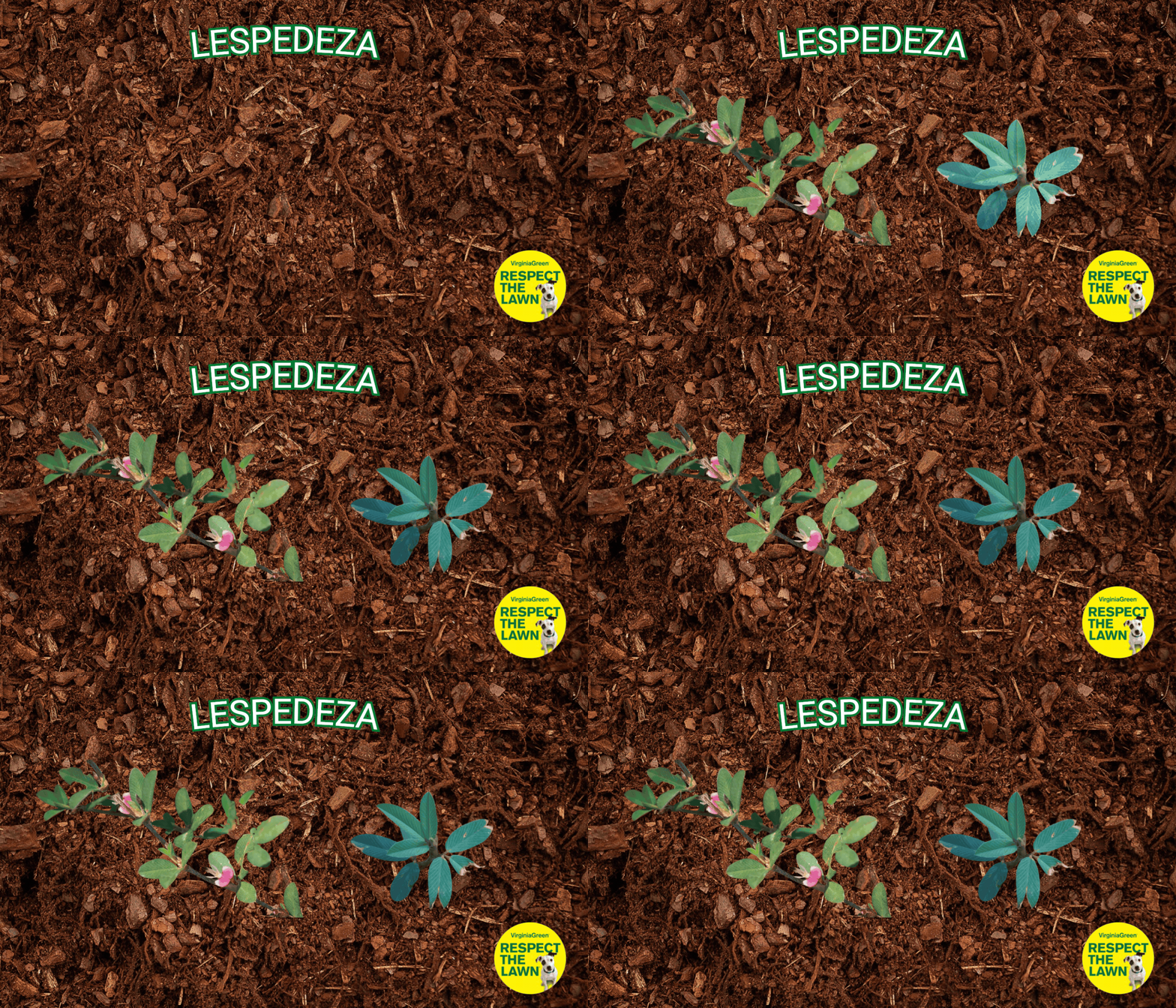
Lespedeza striata has a low, spreading growth habit and often forms patches across thin turf.
The leaves are made up of three small leaflets, giving the plant a clover-like appearance.
The leaflets are usually narrow, oval to oblong, and less than one inch long.
The leaves grow alternately along the stem.
The stems may appear green to purplish and can have fine hairs.
Small pea-like flowers appear in the leaf axils during summer and may be pink, purple, lavender, or white.
The plant produces small legume pods, each containing a single seed.
- Lespedeza striata is a summer annual weed, meaning it germinates, grows, flowers, produces seed, and dies within one growing season.
Why You Should Remove Lespedeza from Your Yard
Lespedeza striata may look harmless at first, but it can create problems for homeowners who want a thick, uniform lawn. It competes with turfgrass for sunlight, water, nutrients, and growing space during the summer months.
This weed is especially common in lawns with thin turf, poor soil conditions, drought stress, low fertility, or compacted areas. Once it gets established, it can spread across weak spots and make the lawn look patchy or uneven.
Because lespedeza produces seed, untreated plants can contribute to future weed problems. A few patches one summer can become a larger issue the following year if the lawn does not become thicker and healthier.
Long-term lespedeza issues often point to turf that needs better density, stronger root growth, and more consistent care. The thicker your lawn is, the less space summer annual weeds have to germinate and spread.
When and How to Remove Lespedeza
The best way to manage Lespedeza striata is to target it while it is young and actively growing. Since it is a summer annual weed, it usually becomes more noticeable as temperatures rise and lawns begin experiencing summer stress.
If only a few plants are present, hand-pulling may help, especially when soil is moist and the roots can be removed more easily. Larger patches usually require a more consistent lawn care approach.
Post-emergent broadleaf weed control can help manage lespedeza after it appears, but timing matters. Younger weeds are typically easier to control than mature plants that have already flowered and started producing seed.
For long-term prevention, focus on building a thicker lawn through proper fertilization, mowing, watering, aeration, overseeding, and consistent weed control. Healthy turf is the best defense against lespedeza because dense grass leaves less open soil for weed seeds to establish.
View the rest of our common weed guide, here.

Need Help Tackling Weeds?
Our agronomists (soil scientists) can give your lawn the attention it deserves.