

Henbit
Also known as deadnettle, Henbit was originally introduced from Europe and is now commonly found throughout Virginia lawns. While its early spring flowers provide nectar for pollinators, Henbit is a highly invasive weed that can quickly rob the nutrients from your lawn.
Henbit (Lamium Amplexicaule)
Winter Annual
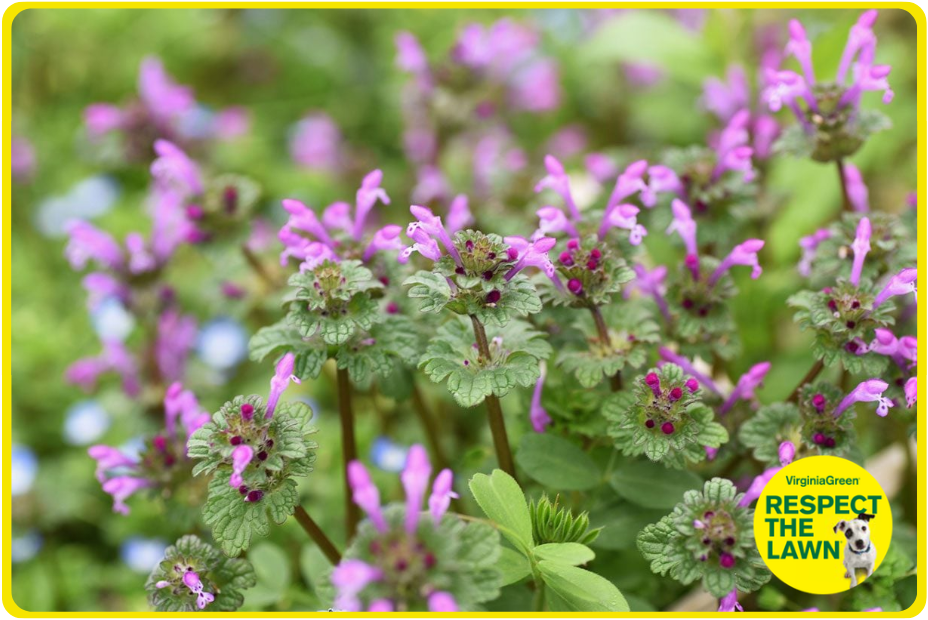
Henbit has pink-purple, tube-shaped flowers with square stems that can reach up to sixteen inches in height. Its circular or heart-shaped leaves grow in opposite directions, reaching five inches in length, and have hairs on the upper leaf surfaces and along the veins of the lower surface. Stems appear as square (if cut in cross section) and are covered with downward-pointing hairs that root at the lower nodes.
Identifying Henbit
Henbit is a common winter annual weed found throughout Virginia lawns. It is easy to recognize by its square stems, rounded leaves with scalloped edges, and small pink-to-purple flowers that often appear in early spring. Henbit typically germinates in the fall, survives through winter, blooms in spring, produces seed, and then dies off as temperatures rise. Unlike dandelions, henbit does not have a deep taproot. Instead, it has a shallow, fibrous root system and often grows in patches across thin or weakened turf. Because henbit begins growing before many lawns fully green up, its purple flowers can stand out quickly and take away from the clean, healthy look of your yard.
You can Identify Henbit with the Following Visual Cues:
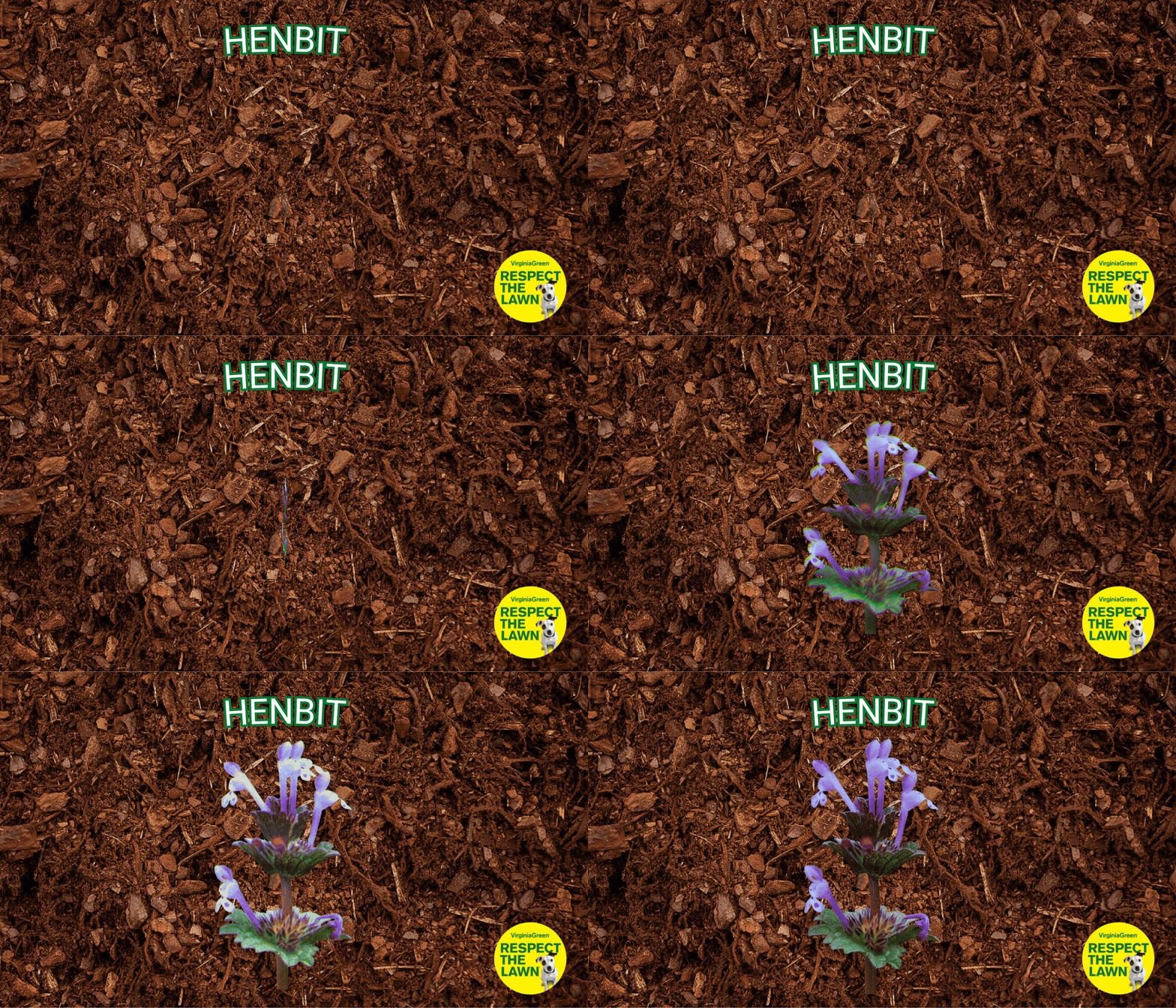
- Henbit has distinctive square stems, which is a common trait of plants in the mint family
- The leaves are rounded to heart-shaped with scalloped edges.
- The upper leaves clasp directly around the stem, while the lower leaves grow on small leaf stalks.
- The leaves often have a wrinkled or textured appearance with visible veins and fine hairs.
- Small pink-to-purple tubular flowers grow in clusters around the upper portions of the stem during spring.
- Henbit has a shallow, fibrous root system rather than a deep taproot.
Why You Should Remove Henbit from Your Yard
Henbit may look small at first, but it can create several problems for homeowners who want a thick, healthy lawn. This winter annual weed competes with turfgrass for sunlight, moisture, space, and nutrients during an important time of spring growth. As henbit spreads, it can make your lawn look patchy, uneven, and less cared for.
Henbit is especially common in lawns with thin turf coverage, compacted soil, or areas where grass is already struggling. Because each plant can produce seed, untreated henbit can return year after year and continue spreading across the lawn. Long-term henbit issues often point to a lawn that needs better density and stronger overall health. The thicker your turf is, the less room weeds like henbit have to germinate and grow.
When and How to Remove Henbit
The best way to control henbit is to target it before it becomes noticeable in spring. Since henbit germinates in the fall, a proactive weed control program can help reduce future infestations before they have a chance to take over.
If henbit has already emerged, post-emergent broadleaf weed control can help manage the weed while it is young and actively growing. However, mature henbit can become more difficult to control as it gets closer to flowering and producing seed.
For long-term prevention, focus on building a thick, healthy lawn through proper fertilization, mowing, watering, aeration, and consistent weed control. At Virginia Green, our lawn care programs are designed to strengthen your turf while helping manage common Virginia weeds like henbit. With professional applications and year-round lawn care, your lawn has a better chance of staying thick, green, and healthy through every season.
View the rest of our common weed guide, here.

Need Help Tackling Weeds?
Our agronomists (soil scientists) can give your lawn the attention it deserves.