

Dandelion
One of the most common weeds in the Mid-Atlantic with an easily identifiable yellow flower, Dandelion is synonymous with parks and fields. Its invasion into your lawn can be problematic, as plant growth is fast, and seeds have the ability to travel quickly.
Dandelion (Taraxacum Officinale)
Perennial
Best known for their yellow flowers, dandelions have a thick tap root that is dark brown on the outside and milky white inside. Their long jagged leaves form a rosette lying close to the ground. Dandelion’s smooth, leafless and hollow stalks bear a single flower head and radiate straight out of their root system. A strong wind can carry away dandelion seeds miles away from its parent plant, traveling like tiny parachutes.
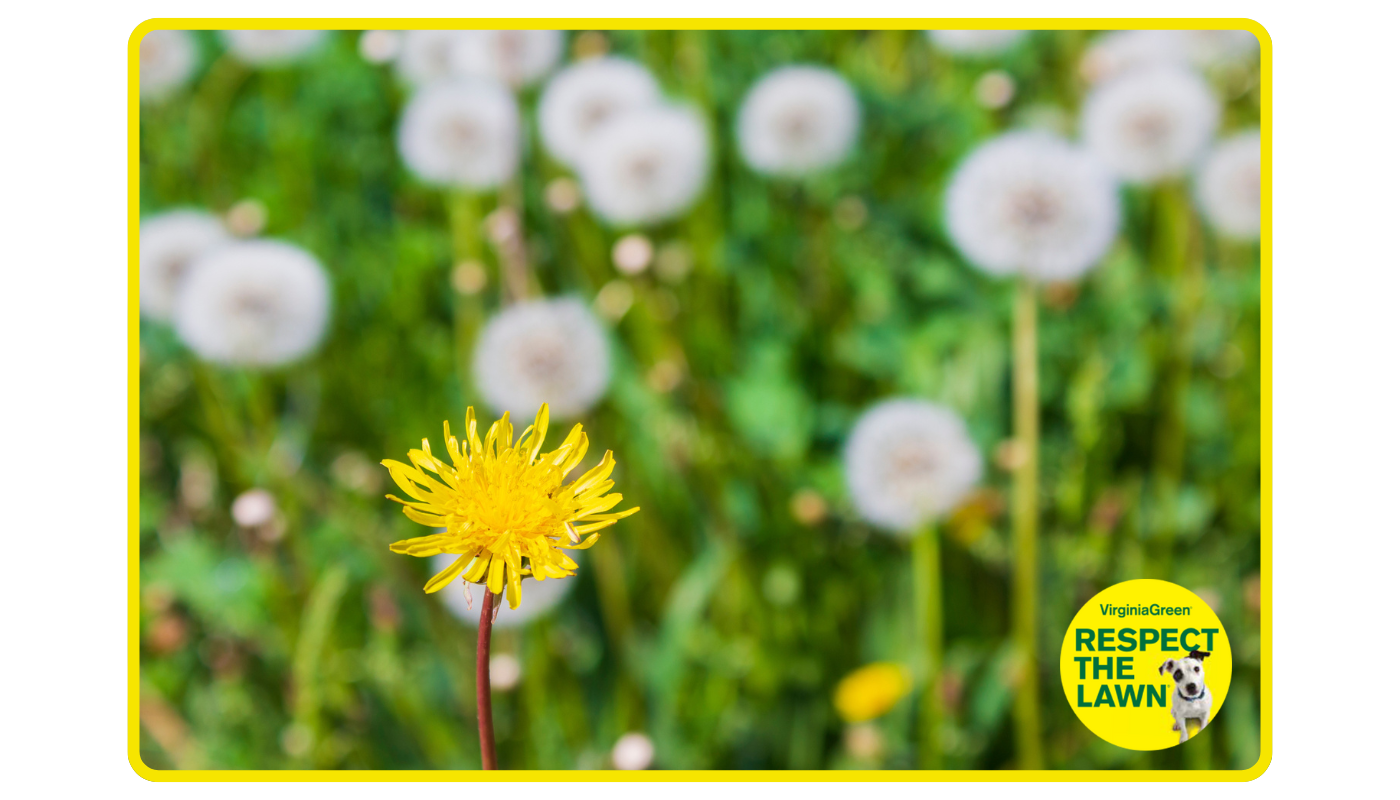
Identifying Dandelion
Dandelions are very common and easily identifiable by their jagged leaves and tall, yellow flowers. The weed initially forms in a basal rosette, meaning the leaves sprout from a low point and spread outwards from the base. The common yellow dandelion flowers you see are produced on a leafless stalk. This stalk has a milky fluid present when broken or cut. Seeds are produced without pollination and are present on the white, parachute like pappus that enable them to travel long distances in the air.
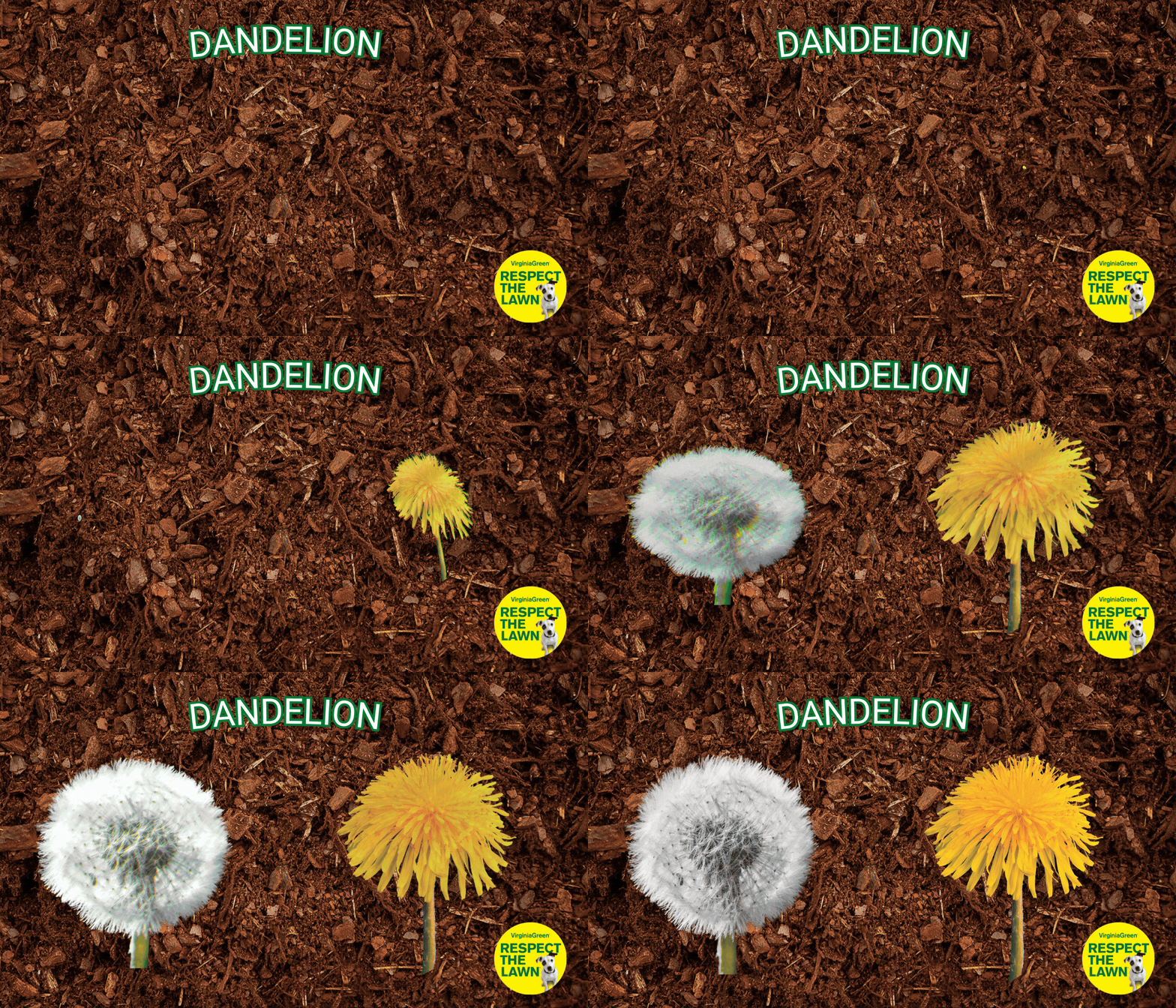
You can Identify Dandelion with the Following Visual Cues:
- All the Dandelion leaves grow from a central point in the ground, forming a basal rosette.
- The mature Dandelion leaves are jagged and fairly narrow.
- The calling cards of Dandelion’s are their yellow flowers growing on a single stem.
- The single stems are hollow and produce a milky sap when broken into. Leaves also produce the same milky sap.
- As the plant fully matures, you can find the seed parachutes atop stems.
- You will find a deep, long taproot when digging up the Dandelion.
Why You Should Remove Dandelion from Your Yard
Dandelions are a common weed in Mid-Atlantic lawns and present a multitude of problems year after year. Like many common yard weeds, Dandelions compete with turf grasses for space and nutrients. You will often find this weed growing in areas where the turf is thin, reducing the look and quality of your grass and yard. The deep taproot of the dandelion also makes it difficult to remove the mature plant.
Long-term effects of dandelions include perennial reproduction. If the taproot remains in the ground, there is a high likelihood the weed will come back year after year. Dandelions also produce numerous seeds that travel with the wind, meaning they have the ability to spread across your yard if left untreated.
When and How to Remove Dandelion
The key to removing Dandelions from your yard for good is to pull the entire plant, making sure you extract the taproot. Mentioned above, the weed has the ability to produce year after year if the taproot is left in the ground. If you are using a professional lawn care company or are planning DIY weed control, you can target dandelions in your yard with a postemergent weed control. Your best defense against dandelions? Proper, year-round lawn care and maintenance, especially with a lawn care company like Virginia Green.
View the rest of our common weed guide, here.

Need Help Tackling Weeds?
Our agronomists (soil scientists) can give your lawn the attention it deserves.